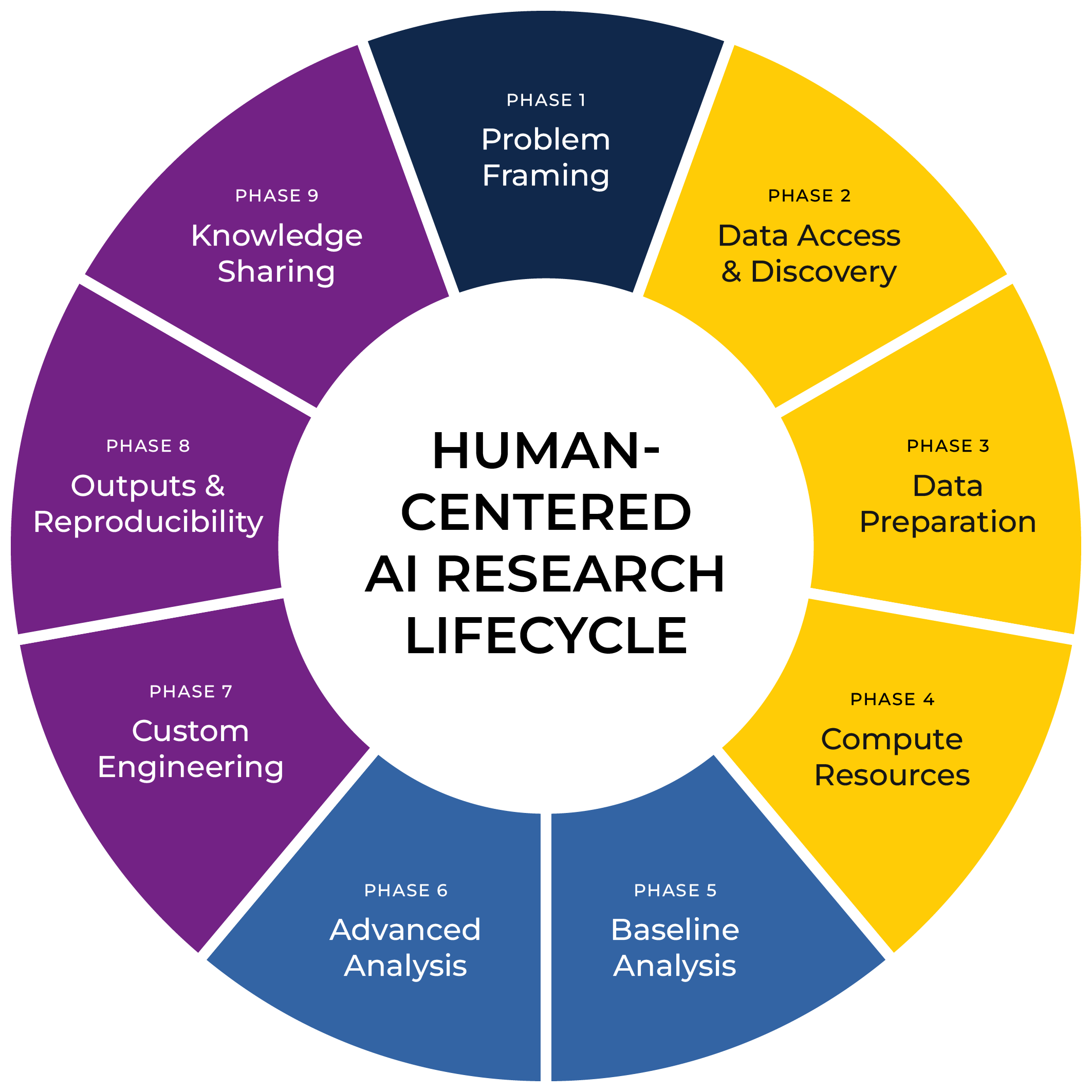
The AI Research Lifecycle
Artificial intelligence is no longer a single tool dropped into the middle of a research project — it has become woven through every phase of the scientific process, from the first question a researcher asks to the moment findings are shared with the world. Yet the pace of AI adoption has far outrun the frameworks researchers have for thinking about it clearly.
The AI Research Lifecycle is a nine-phase model developed to help researchers navigate this landscape with intention. It does not prescribe a single workflow. Instead, it names the key decision points at which AI can either amplify a researcher’s contributions or quietly introduce assumptions, biases, and blind spots that undermine them. Understanding which phase you are in — and what AI can and cannot do for you there — is a form of scientific literacy for the twenty-first century.