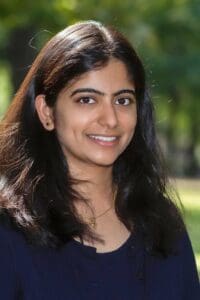
My research advances Causal Neuro-symbolic AI (CausalNeSy), a framework that integrates causal reasoning into Neuro-symbolic AI systems to achieve more explainable, robust, and human-like artificial intelligence. At its core, my work bridges two powerful paradigms: causal AI, which enables machines to reason about cause-and-effect relationships beyond statistical correlations, and Neuro-symbolic AI, which combines neural learning with structured symbolic knowledge.
A central methodology in my research is Knowledge Graph Link Prediction for causal discovery, using knowledge graphs to encode domain expertise and causal structure, and then applying link prediction techniques to learn and infer causal relations. This includes work on hyper-relational knowledge graphs and causal discovery that eliminates confounding backdoor paths, resulting in three patent filings in collaboration with Bosch Center for AI.
I apply these methods across high-impact domains. In smart manufacturing, I develop multi-agent Neuro-symbolic copilots (CausalPulse, CausalTrace) for root cause analysis and causal diagnostics. In autonomous driving, I build causal entity prediction systems that enhance scene understanding and safety. In healthcare, I use causal and Bayesian inference methods to support personalized pediatric asthma management and explainable clinical decision-making. I also leverage knowledge graphs to improve interoperability in industrial metaverse environments (iMetaverseKG), a collaboration with Siemens.
Beyond these applications, my CausalNeSy framework has broader potential for studying policy interventions, analyzing treatment effects, identifying causal pathways in biological mechanisms, and providing transparent explanations for traditionally black-box models. I use tools and methods including knowledge graphs, ontology design patterns, Bayesian networks, large language models, multi-agent systems, and multimodal sensing data.
One of my most exciting projects is CausalPulse, a neuro-symbolic multi-agent copilot for root cause analysis in smart manufacturing. Rather than simply flagging anomalies, CausalPulse reasons about why a failure occurred by combining causal knowledge graphs with large language model agents. This kind of causal diagnostic capability is something traditional AI systems cannot do, and it has real implications for reducing costly production downtime in industrial settings. Another project I find deeply meaningful is my early work on pediatric asthma management through the kHealth system. Using multimodal IoT sensing, mobile apps, and knowledge-graph-enabled digital phenotyping, we built a personalized system that could tell a parent "Is it safe for my child's asthma today?" — drawing on air quality, activity, sleep, and clinical data. Seeing AI directly empower families and clinicians made this one of the most rewarding research experiences of my career.
My journey began with an interest in swarm intelligence and computational paradigms during my early research in India. When I came to Wright State University for my M.S. and then moved to the University of South Carolina's AI Institute for my Ph.D., I found myself at the intersection of knowledge graphs, healthcare AI, and causal reasoning. Industry internships at Bosch Center for AI and Siemens deepened my conviction that AI needs causal understanding to be truly reliable and deployable in the real world. Those experiences directly produced three patent applications and shaped my research agenda. Now, as an Assistant Professor at University of Michigan-Dearborn, I am building on that foundation to develop the next generation of causal, explainable AI systems.
I want to establish causal neuro-symbolic AI as a foundational paradigm for trustworthy, human-aligned AI, one that does not just recognize patterns but genuinely understands cause and effect. My goal is to create AI systems that can explain why something happened, reason about what would happen if we intervened, and do so transparently enough that clinicians, engineers, and policymakers can actually trust and act on those insights. If I can help shift the field from correlation-based AI toward causal AI that is both scientifically rigorous and practically deployable, that would be the contribution I am most proud of.
What excites me most is that causal AI sits at a frontier where philosophy, mathematics, and real-world impact genuinely converge. Every time I see a causal model surface a root cause that a neural network would have missed or explain a health outcome in terms a doctor can act on. I am reminded that we are building something qualitatively different from conventional AI. I am also energized by the interdisciplinary nature of this work: my collaborators include cellular and molecular biologist, biophysicist, manufacturing engineers, pediatricians, autonomous driving researchers, and industrial metaverse designers. That breadth keeps the science grounded and surprising.
1. I have filed four patents — three in collaboration with Bosch Center for AI and one with Siemens — all stemming directly from my Ph.D. research on causal knowledge graphs and industrial metaverse. It is rare for academic AI work to move so directly into industrial intellectual property.
2. I have been featured on the Data Skeptic podcast discussing Causal Neuro-Symbolic AI. I enjoy translating complex research for broad audiences as much as I enjoy the technical work itself.
3 I am the organizer of the Causal Neuro-symbolic AI workshop.
4. Outside of AI research, I am passionate about mentoring students groups in computing. I have received the AnitaB Grace Hopper Scholarship (sponsored by Two Sigma) and the CRA-WP Grad Cohort for Women scholarship, and I served as an area chair and mentor at venues like NeurIPS WiML.