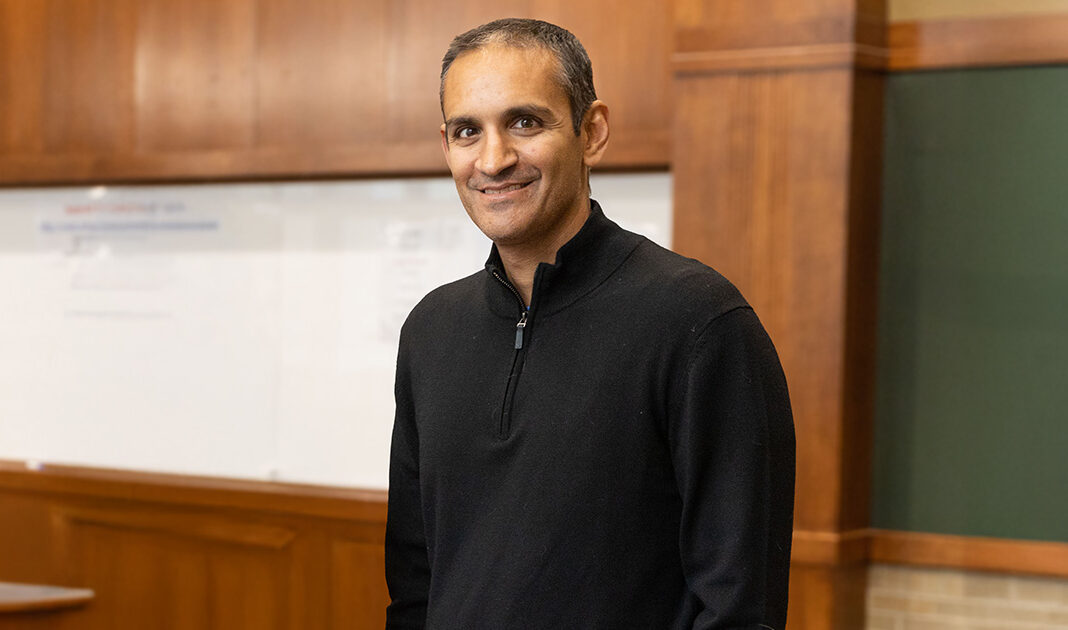
Vivek Sankaran
Clinical Professor of Law, Michigan Law; Director, Child Welfare Appellate Clinic; Co-director, AI Law and Policy Clinic
Bio
Vivek Sankaran, ’01, is a clinical professor of law at the University of Michigan Law School, where he champions the rights of children and parents involved in child welfare proceedings. His work centers on transforming the child welfare system by empowering families, advancing justice through thoughtful legal reform, and building more compassionate legal institutions.
Sankaran directs the Child Welfare Appellate Clinic, where students represent clients in trial and appellate proceedings. He also is the co-director of Michigan Law’s AI Law and Policy Clinic, which equips students to tackle critical justice challenges at the intersection of emerging technology, law, and ethics.
Nationally recognized for both his teaching and advocacy, Sankaran is the recipient of the John W. Reed Michigan Lawyer Legacy Award from the State Bar of Michigan and Michigan Law’s Teaching Award for Support of Student Community and Well-Being. His writing—widely published—calls for deeper reflection on the values underlying legal systems, and his appellate litigation has helped shape Michigan law on the rights of families.
Beyond the courtroom and classroom, Sankaran is leading a national movement to bring compassion into legal practice. After completing the Applied Compassion Training at Stanford University, he now designs and facilitates compassion retreats across the country for the legal community, including judges, lawyers, and law students.
Sankaran began his legal career as a Skadden Fellow at the Children’s Law Center in Washington, DC. In 2009, he founded the Detroit Center for Family Advocacy, the first legal model in the nation to use multidisciplinary teams to prevent unnecessary foster care placements. He has worked closely with national organizations like the American Bar Association, Casey Family Programs, and the National Center for State Courts on initiatives to promote justice and family preservation.
He also is the co-editor of the first national book for family defense attorneys and of the third edition of Child Welfare Law and Practice, a leading reference for child welfare lawyers nationwide.

Bridgette Carr
Clinical Professor of Law, Michigan Law; Co-director, AI Law and Policy Clinic
Bio
Bridgette Carr, ’02, is a clinical professor of law at the University of Michigan Law School, where she co-directs the AI Law and Policy Clinic and co-teaches Designing a Fulfilling Life in the Law (DFL), a course that helps law students build the skills to create meaningful, sustainable careers. She is also a faculty affiliate at the Center for Positive Organizations at U-M’s Ross School of Business.
Abstract
Most Americans facing a legal problem, whether an eviction, a custody dispute, or a debt collection suit, navigate it alone. In three out of four civil cases in state courts, at least one side has no lawyer, and the judges and lawyers inside the system are burning out. We will never hire enough lawyers to close this gap.
Enter artificial intelligence. AI tools can now explain legal concepts in plain language, draft documents, and guide people through procedures that once required years of training. But the same technology fabricates case citations, offers no confidentiality, and could flood overwhelmed courts with new filings, deepening the very crisis it promises to solve.
Drawing on their work leading Michigan Law’s AI Law and Policy Clinic, where students build and test AI tools with real courts and legal aid organizations, Bridgette Carr and Vivek Sankaran explore what AI can genuinely fix in the justice system and what it might break.
Parking/Accessibility
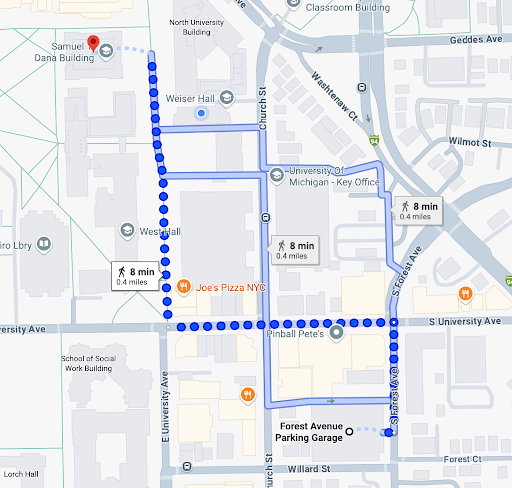
The closest public parking garage to the Samuel T. Dana building is the Forest Ave. Parking Garage located at 650 S Forest Ave, Ann Arbor, MI 48104.
Forest Ave. Parking Garage located at 650 S Forest Ave, Ann Arbor, MI 48104.
For guidance on directions, U-M faculty/staff parking, and accessibility, please visit: https://maps.studentlife.umich.edu/building/samuel-trask-dana-building
This series is co-sponsored by

Please reach out to Ben Surgalski ([email protected]) with any questions.