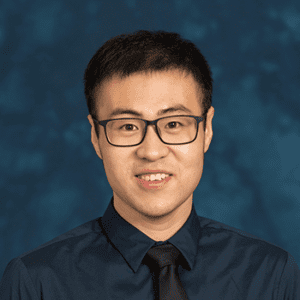
My research focuses on developing principled foundations for trustworthy and scalable autonomy in mobility and robotics by integrating uncertainty modeling, continual learning, and safety-constrained engineering design. Concretely, my work addresses the long-tail problem in autonomous driving, using confidence-aware reinforcement learning and disengagement-driven continual learning to detect generalization boundaries and trigger targeted policy updates. I develop probabilistic uncertainty quantification tools that enable conservative, failure-aware planning in rare and safety-critical scenarios. More recently, I apply vision-language models and spatial reasoning to embodied agents capable of executing natural language instructions across environments, with rapid cross-platform transfer under the DARPA TIAMAT program. Methodologically, I draw on deep RL, transformer-based sequence models, diffusion-based trajectory generation, and low-rank adaptation (LoRA) for efficient model evolution at scale.
I currently lead the autonomy transfer research under the DARPA TIAMAT program, developing techniques that enable autonomous agents to deploy in unfamiliar environments on the same day, with minimal data and no environment-specific retraining. I also developed a continual learning framework for long-tail autonomous driving scenarios, deployed during the 2022 Beijing Winter Olympics. The core idea is to enable autonomous vehicles to systematically detect when they operate beyond their safety boundary and continuously improve from those rare, high-risk cases.
We are at a unique moment in history where AI systems are beginning to perceive, reason, and act in ways that go beyond what any individual human can achieve, and I believe we have barely scratched the surface of what this technology can ultimately become. My work on safe and scalable autonomy is about unleashing this intelligence into the physical world, making it trustworthy and robust enough to operate reliably in the rare, unpredictable situations that matter most. Only then can these systems truly help humanity capture the full value that this extraordinary technology promises.