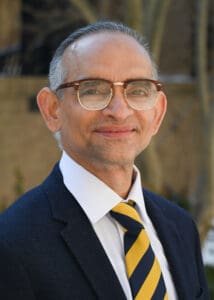
I am the William G. Barsan Collegiate Professor of Emergency Medicine and Pediatrics at the University of Michigan (Ann Arbor, MI), where I serve as Chair of the Department of Emergency Medicine. Over more than two decades of uninterrupted NIH and AHRQ funding, my research program has pursued a single overarching goal: to develop and deploy precision diagnostic tools for acutely ill children in the emergency care setting.
My central area of investigation has been the application of host blood transcriptomics to distinguish bacterial from non-bacterial etiologies of acute illness in children. Through the NIH-funded Pediatric Emergency Care Applied Research Network (PECARN), I co-led the first nationwide prospective study of host immune response via transcriptomic analysis in febrile infants ≤60 days of age. This program established that blood RNA biosignatures are feasible, analytically tractable, and diagnostically superior to conventional laboratory evaluation in the acute care setting. The 10-gene transcript panel derived from this work achieves 94–95% accuracy in differentiating bacteremia and bacterial meningitis from non-bacterial (viral) etiologies in febrile infants. Subsequent analyses differentiated specific pathogens at the species level (Streptococcus pneumoniae vs Escherichia coli, and RSV vs Influenza vs Rhinovirus), and we developed the Molecular Distance to Health (MDTH) score, which compresses the full transcriptomic perturbation of each patient into a single numeric value that correlates with disease severity and independently predicts outcomes. These results are published in JAMA (2016), JAMA Pediatrics (2019), and Pediatric Emergency Care (2015).
Building on this transcriptomic infrastructure, I am now leading a prospective observational study of pediatric sepsis in the emergency department, which serves directly as the preliminary data and feasibility platform for this RM1. To date, we have enrolled 245 children (3 months–18 years) with suspected ED sepsis and collected simultaneous whole-blood samples for RNA-seq, multiplex cytokine profiling, and pathogen identification. Pilot analysis of the first 24 subjects with complete processed samples demonstrated that a multimodal model integrating transcriptomic features with physiologic and cytokine data achieved AUROC 0.902 (95% CI 0.867–0.937), compared to 0.840 for EHR-only models, confirming that transcriptomic features provide substantial additive diagnostic value even at this preliminary scale.
Please describe one or two of your most interesting projects.
My most substantial contribution to science is the development and clinical translation of blood RNA biosignatures for distinguishing bacterial from non-bacterial etiologies of acute febrile illness in children. Working within the NIH-funded PECARN network, I co-led the first nationwide prospective study of host immune response transcriptomics in the emergency setting, enrolling febrile infants ≤60 days of age across 11 pediatric EDs. We established that a 2-transcript host RNA signature could distinguish serious bacterial infections from non-bacterial illness with diagnostic accuracy exceeding conventional laboratory markers, including procalcitonin and C-reactive protein. Subsequent work refined this to a 10-gene panel achieving 94–95% accuracy for bacteremia and bacterial meningitis vs. viral etiologies, and demonstrated species-level pathogen differentiation ( Streptococcus pneumoniae vs Escherichia coli; RSV vs Influenza vs Rhinovirus) from peripheral blood alone. We further developed the Molecular Distance to Health (MDTH) score, a single-value global transcriptomic perturbation metric that predicts disease severity and outcomes independently of conventional markers.
What makes you excited about your data science and AI research?
I believe that AI in its current state and its future state will be the accelerant for all aspects of health care and rapidly advance the four academic missions of my department: clinical care delivery, generating new evidence, educating the next generation of emergency providers and being a fierce advocate for my specialty.