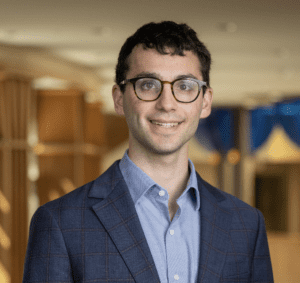
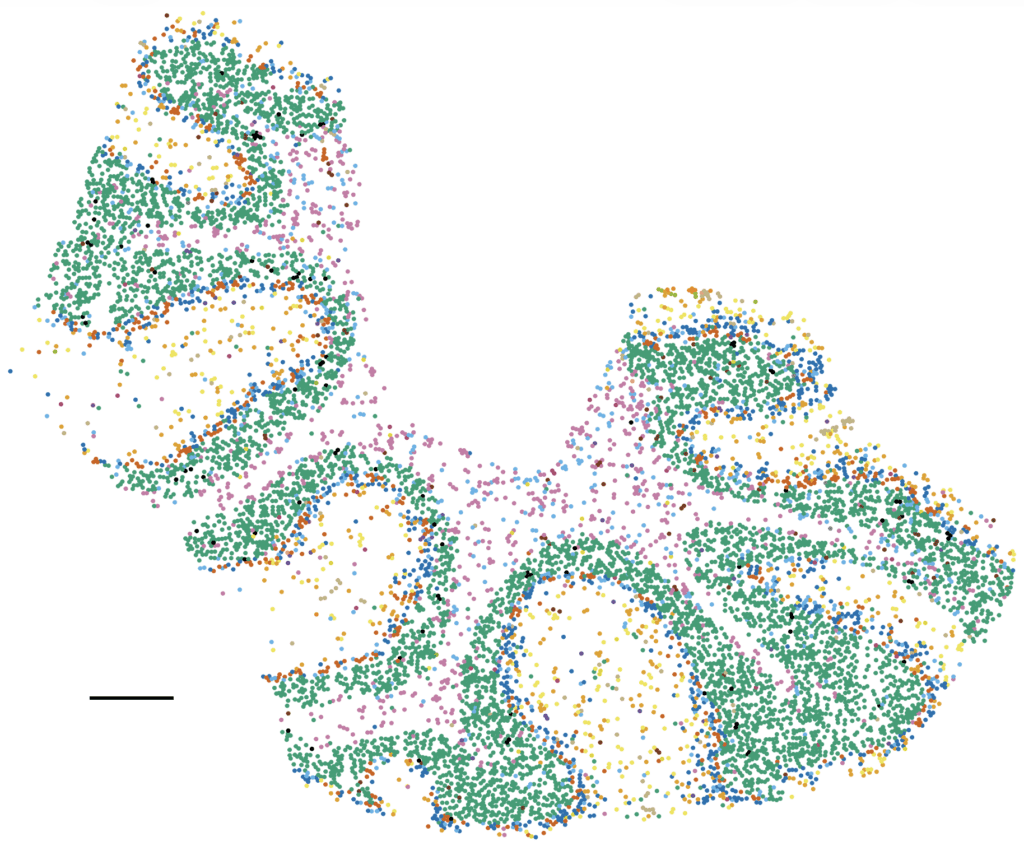
I am an assistant professor in biostatistics at the University of Michigan. My research involves developing rigorous statistical modeling approaches for emerging high-throughput genomics technologies, such as spatial transcriptomics and single-cell RNA-sequencing. We are interested in the application of high-throughput genomics technologies to better understand human health and disease, as well as integration with clinical settings and drug discovery pipelines. We design and adapt data science methodologies for the specific biological problem at hand, flexibly using tools from statistics, computer science, AI, and mathematical optimization.
How did you end up where you are today? (Your research journey)
When I was in high school and early college I was mostly interested in pure mathematics and computer science. The problems I really cared about solving were all about improving human health. My academic journey has been very exploratory across disciplines. I majored in math as an undergrad, received a PhD in computer science, and now I teach biostatistics! This shapes my approach to data science today, which I believe is about combining insights from different fields to address the problems at hand, which for me lie in biology.
What is the most significant scientific contribution you would like to make?
We are at a really exciting technological time where we have both the experimental technology to collect large amounts of precise biological data and advanced data science / AI methodology to analyze this data. I hope to use machine learning, AI, and statistical models to better understand disease trajectories at a precise, individual-patient level. I envision a future where we can leverage these models to design precision therapeutics based on a patient’s specific mutations or disease characteristics.