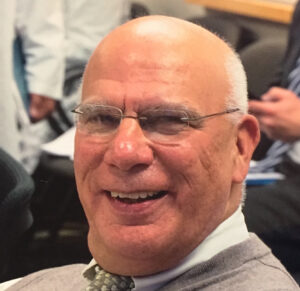
I have, over the past 13 years, become engaged in the pursuit of high performance Learning Health Systems (LHS). This pursuit has focused on the sciences underlying the establishment and sustenance of LHS; methods to establish such systems, and the establishment of a trained workforce to support them. Early in this pursuit (2009-2013), I mobilized LHS activities within the federal government and after moving to the University of Michigan, employed the university as the base for these efforts which have been instrumental in developing a consensus LHS vision, identifying scientific and engineering research challenges underpinning the development of the LHS at scale, and envisioning an interdisciplinary science to address the LHS research challenges.
In 2017, I recognized the need for creating scalable infrastructure supporting the curation, management, and dissemination of computable biomedical knowledge which includes AI models and algorithms. This recognition led to the establishment of the Knowledge Grid group within the Department of Learning Health Sciences, and simultaneously to the initiation of the movement to Mobilize Computable Biomedical Knowledge (MCBK). MCBK, which began as a US-based entity, evolved into a global movement in 2022. The Knowledge Grid project evolved into the Knowledge Systems Laboratory in 2023.
My professional roles have provided me with practical experience in making information technology interventions robust, reliable, and effective by adapting them to the needs of the end-users. I have conducted several rigorous studies of health information technology, with emphasis on cognition and clinical reasoning, and am senior author of a recently revised textbook on evaluation and empirical methods for biomedical informatics which has been widely used and cited.
My direct engagement with AI in health care began in 1984 when I collaborated with a team at Stanford to develop a AI advisor system to support drug therapy. I later collaborated in the development and evaluation of diagnostic systems and a wide range of other applications. My approach has emphasized the “fundamental theorem of informatics” which holds that the role of information technology in health care is to improve human performance rather than replacing it.
Please describe one or two of your most interesting projects.
I am currently working to expose the relationships between AI and Learning Health Systems (LHS). More specifically, I am focused on why LHS and AI need to each in order for each to realize its full potential to drive health improvement. AI needs LHS infrastructure as a persistent means to ‘land” AI applications in health care environments, just as aircraft need the full capabilities of a modern airport in order to land safely under all conditions. In turn, LHS needs AI applications to power the data driven interventions that can improve health at scale.
My lab is working on methods for integrating genAI and pure-function models to take advantage of the best features of each. We posit that genAI will never (and probably should never) replace the straightforward functionality of sophisticated calculators, predictive models, computable clinical guidelines, and computable phenotypes. At the same time, genAI could be extremely useful for such purposes as finding the best pure function to use in a particular situation, comparing them, and contrasting them.
What is the most significant scientific contribution you would like to make?
I would like to help Learning Health Systems and AI achieve their full potential by working in harmony, and in a way consistent with the goal of making people better.