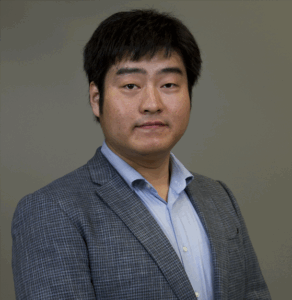
My research develops physically-informed and hybrid artificial intelligence and deep learning (AI/DL) methods to advance sustainable water and energy system planning and management under a changing climate and extreme weather. Specifically, as a trained hydrologist, I focus on integrating data science, numerical models with hydrology, weather and climate sciences, and water resources engineering to improve hydrological forecasts and water infrastructure (i.e., reservoir, dam, hydropower systems) decision-making to mitigate the impacts from extreme events, such as floods, droughts, snowpack variability, etc. My research integrates advanced time-series modeling, AI/DL architectures (e.g., mass-conserving LSTMs, state-space models, Convolutional Neural Networks, and LLMs) with large-scale geospatial and remote sensing data analytics and physical hydrologic and reservoir models. These approaches allow us to extend the skill of subseasonal-to-seasonal (S2S) hydroclimatic forecasts, reduce biases in real-time or near-real-time satellite/radar precipitation observations, and optimize reservoir and lake operations under hydrometerological and hydroclimatological uncertainties.
Our projects emphasize both methodological innovation in AI/ML and their translation into actionable tools for agencies and communities. We collaborate with the U.S. Bureau of Reclamation, U.S. Army Corps of Engineers, and NOAA/NWS to improve reservoir operation strategies, streamflow predictions, and public warning systems. At the same time, we integrate education and workforce development into our research—using digital learning, outreach to K-12 and Native American communities, and citizen science engagement to broaden participation in data science, environmental studies, water resources engineering, and hydrological sciences.
1. NSF CAREER AI-guided Reservoir Operations under forecast uncertainty
Summary: This project develops mass-conserving and physics-aware deep learning models to improve subseasonal-to-seasonal precipitation and streamflow forecasts. By coupling AI with physical reservoir models, we aim to design adaptive reservoir operation strategies that account for weather extremes and shifting climate patterns. The work not only advances fundamental hydrologic forecasting science but also supports mission agencies like the USBR and USACE in managing large dam and hydropower systems across our nation.
2. USBR Snow Forecasting Project and Advancing AI into Operational River Forecasts
Summary: This project focuses on improving seasonal snowpack and meltwater predictions by merging remote sensing, climate reanalysis, and deep learning models. The outcomes help reservoir managers, hydrologists, and forecasters to anticipate streamflows and river stages more accurately and operate water infrastructure more flexibly and adaptively. A unique feature is that we are working with the Colorado River Forecast Center (CBRFC) to push the boundary of AI adoption in the operational river forecast systems. We are working closely with CBRFC forecasters to verify the AI's strengths and limitations against their operational hydrologic models and the Community Hydrologic Prediction System (CHPS). We hope there will be a sweet spot for forecasters to utilize the AI/DL tools, as a second opinion model, to compare against the results obtained from their operational hydrologic models in the real-world setting.
My research journey began during my Ph.D. at UC Irvine, where I was mentored by Professor Soroosh Sorooshian on reservoir system modeling. My Ph.D. was in Civil Engineering with a focus on water resources, and I have a M.S. degree in Mechanical Engineering. I got my BS degree from Tsinghua University in China, and was majored in Mechanical and Mechanics Engineering. After obtaining my Ph.D. in 2015, I spent a few years in the private sector and working as a scientist and consultant at Deltares, whose ancestors were Delft Hydraulics and GeoDelft University before they merged with a research wing of the Dutch government and were renamed Deltares. At Deltares, I served as a key developer for operational reservoir/hydropower and river forecasting models for the Bonneville Power Administration, Tennessee Valley Authority, and the National Weather Service. These experiences shaped my conviction that data science must be tightly coupled with physical understanding and real-world decision-making.
In 2018, I joined the University of Oklahoma as a tenure-track assistant professor. Since then, I have built an interdisciplinary program at the intersection of AI/ML, hydrology, and climate science. With my tenure track team in Oklahoma, my research was recognized by the NSF CAREER program, DOE, USBR, and other agencies. In 2024, I received my tenure promotion at the University of Oklahoma, and I moved to the University of Michigan in 2026, where I began my new academic chapter as an associate professor. This diverse and unique career trajectory reflects an interdisciplinary nature of my research, in which I am eager to meet people from different backgrounds, training, and perspectives to establish innovative collaborative research and educational activities.
I aspire to create a new generation of physically informed AI systems that blend domain knowledge from hydrology, water resources, meterology, and climate science with deep learning architectures. The most significant contribution I aim to make is to extend the predictability horizon of water and climate extremes, transforming subseasonal-to-seasonal precipitation forecasts into actionable tools to enhance scientific research and community resilience against natural hazards.
What excites me is the ability of data science and AI to uncover hidden predictability in complex, chaotic systems like weather, water, and climate. The opportunity to merge physical understanding with machine intelligence opens doors to more reliable forecasts, adaptive infrastructure operation, and equitable solutions for vulnerable communities. AI/ML not only enables better science but also makes science more impactful for society.
1. I love going to see new places, and road trips have been a big part of my life journey. After earning my degrees in California, I started my first job in the Netherlands and later in Washington, D.C., before moving to the central-south U.S. to begin my faculty career in Oklahoma. Now, I’m moving north to Michigan to expand my research. Along the way, my wife, our child, and I have taken countless road trips across the U.S.—from desert highways to mountain passes—turning academic moves into family adventures.
2. I love building things with my hands, whether it’s tinkering with computer hardware for my lab, putting together augmented reality sandboxes for outreach, fixing things in my house, or even assembling Lego sets with my kids. When my wife and I bought our first house, we even DIYed by replacing the entire flooring, repainting the whole house, including a 20-foot vaulted ceiling, and remaking the entire garden and landscaping. It was very fun!
3. I’m an animal lover, and my family includes two cats we adopted back in 2015, the same year my wife and I got married. One is a mischievous yellow tabby named Mr. Bean, and the other is a calm white-and-black striped tabby named Sesame. They’ve traveled with us through career moves and road trips, and my students sometimes hear their cameos during Zoom calls. Don't be surprised when they suddenly jump into my camera. They like the sciences as I do!