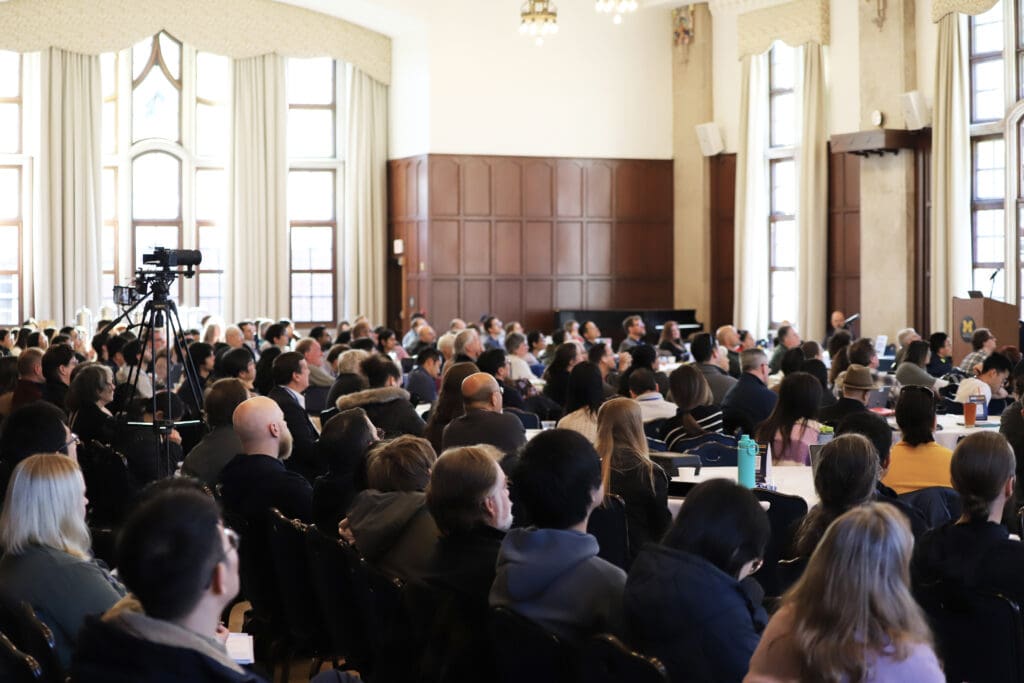
In November, MIDAS brought together hundreds of the University of Michigan’s data science and AI community, along with partners from academia, industry, and government, for the annual U-M Data Science and AI Summit. As the largest event of its kind on campus, the Summit showcased the full spectrum of U-M’s leadership in data and AI research, from theoretical advances to real-world applications that address scientific and societal challenges.
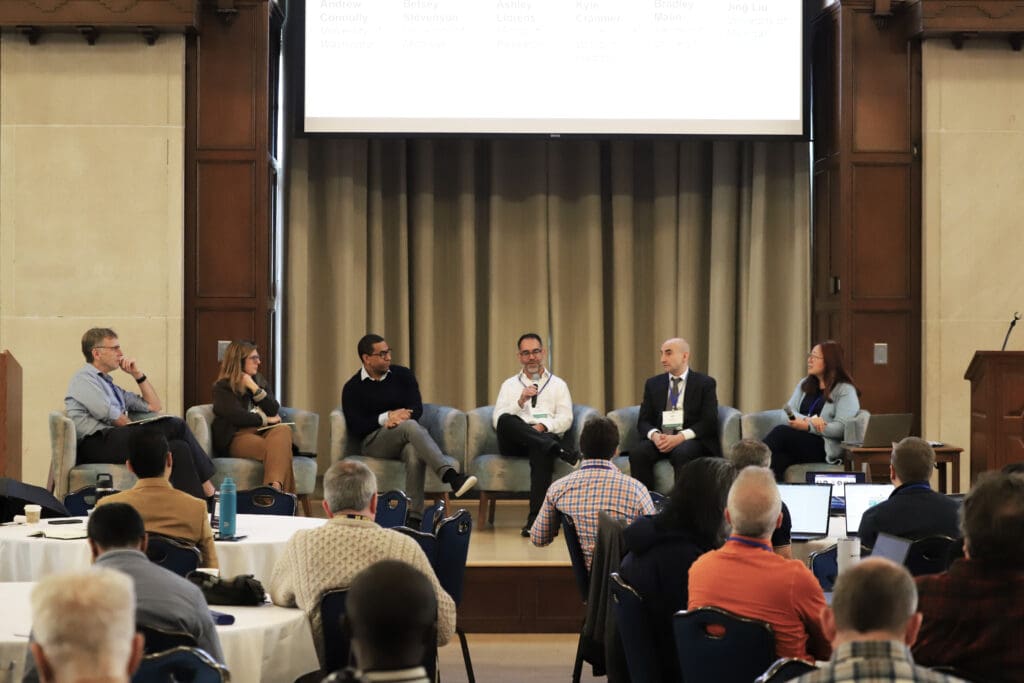
This year’s program featured five distinguished keynote speakers whose work is shaping the future of science, technology, health, and policy. Andrew Connolly opened the Summit with insights on how AI is transforming astrophysics and large-scale scientific discovery. Betsey Stevenson explored how AI may reshape the future of work and human flourishing, and Ashley Llorens shared Microsoft’s perspective on research frontiers in the AI era. Kyle Cranmer highlighted the emergence of new patterns in AI for science, and Brad Malin closed the event with a call for responsible, equitable, and trustworthy AI in health data and biomedical informatics.
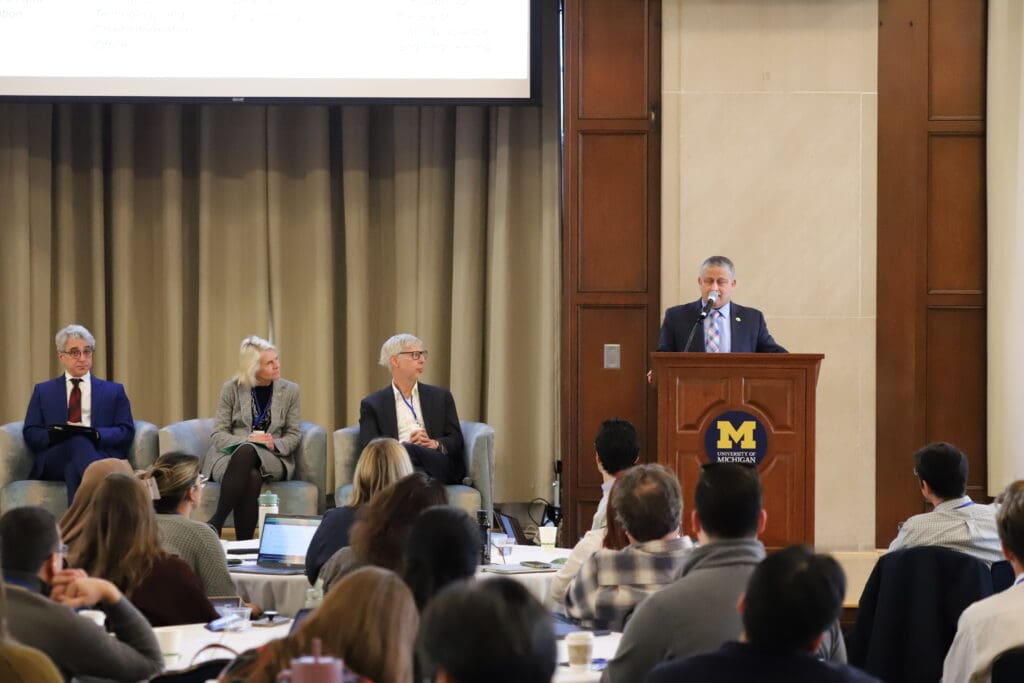
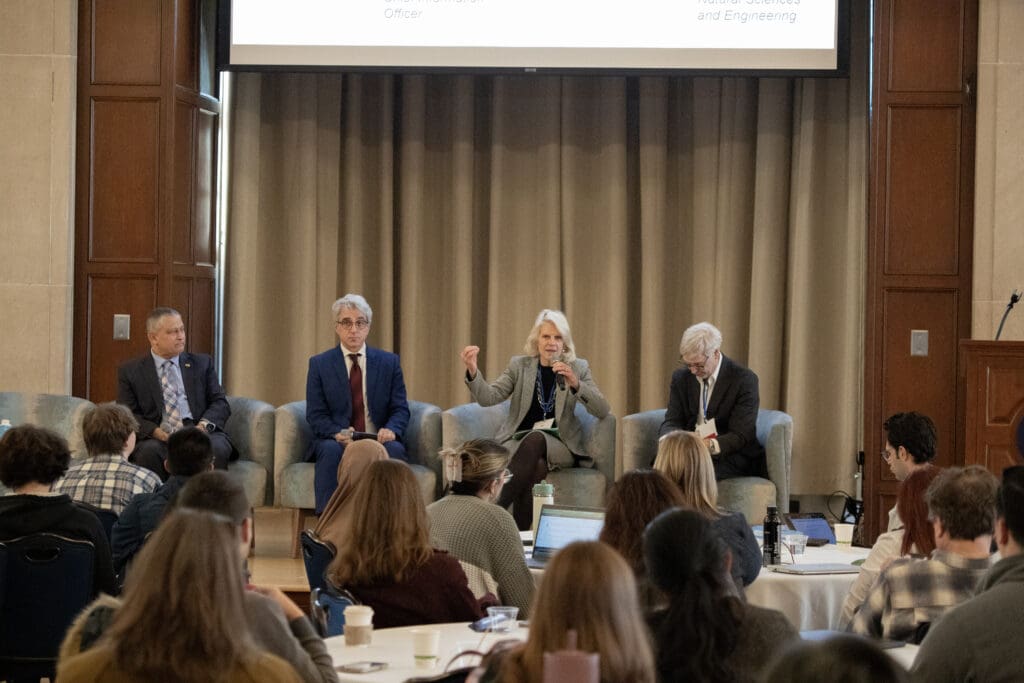
A major highlight was the University Vision Panel, where U-M leaders Arthur Lupia, Karen Thole, and Ravi Pendse joined moderator Brad Orr to discuss the university’s strategic direction in AI. Their conversation underscored U-M’s commitment to building the talent, partnerships, and infrastructure needed to advance AI research and innovation across campus.
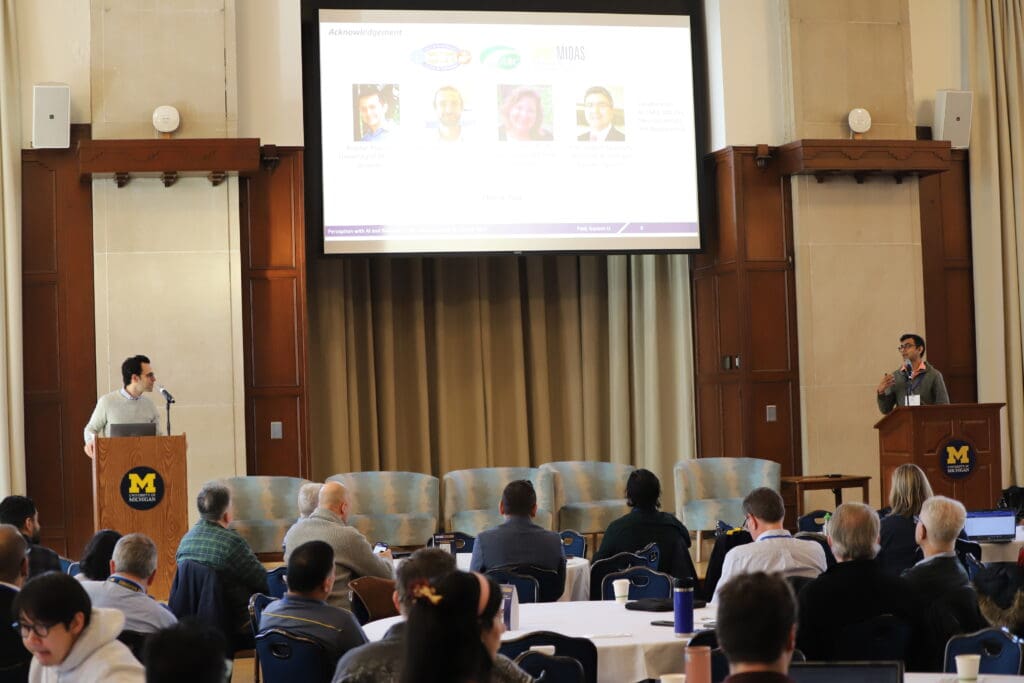
Throughout the two-day event, faculty, students, and research fellows presented cutting-edge work during the Research Vision Talk sessions. These talks spanned disciplines including medicine, physics, engineering, public policy, information science, and the humanities. Presenters shared new approaches to uncertainty quantification, biosonar-inspired AI, responsible AI frameworks, brain–computer interfaces, fusion device optimization, and global governance of AI capacity.
Poster Awards Spotlight
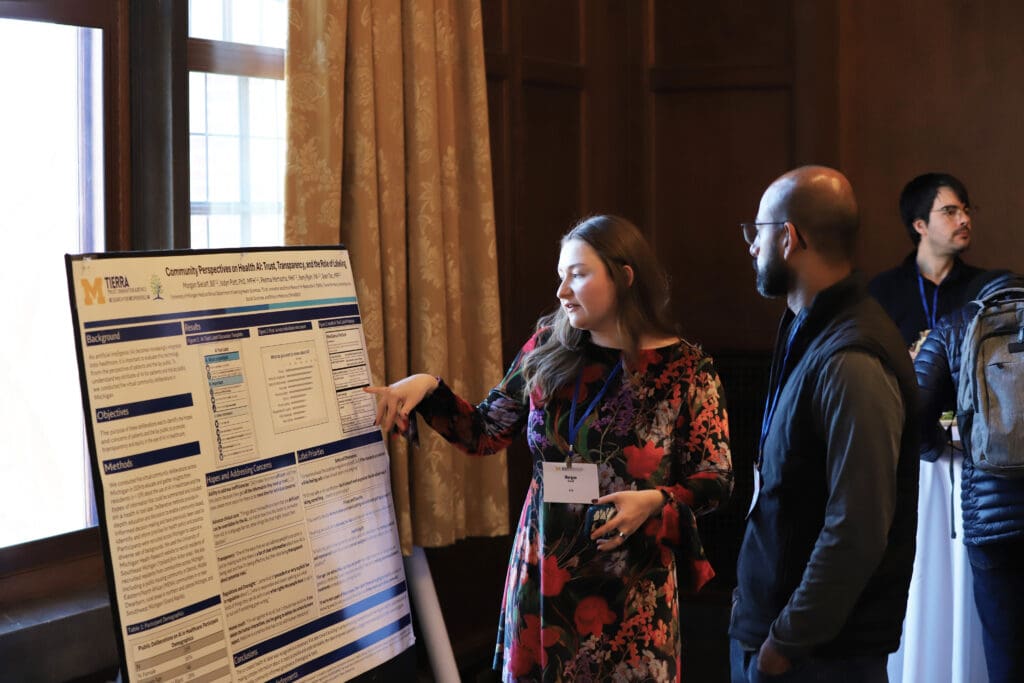
The Summit also celebrated standout contributions from the research poster session. Awardees included:
- Best Overall Poster: A Generalized Framework for Alchemical Machine-Learned Coarse-Grained Interaction Models in Polymer-Grafted Nanoparticle Self-Assembly — Melody Zhang
- Outstanding Research Innovation: A Workflow for Predicting High Temporal and Spatial Resolution Rainfall Data Using Machine Learning Tools — Marwah Al Ismail
- High-Impact Application: Leveraging Modern Machine Learning to Improve Early Warning Systems and Reduce Chronic Absenteeism in Early Childhood — Tiffany Wu
- Excellence in Communication: Cultural Aspects of General Artificial Intelligence — Maria Fields
- Best Reproducibility: Scalable Geometric Defect Detection in Manufacturing Using Synthetic 3D Point Cloud Data — Mei (Alice) Ruo-Syuan
- Audience Favorite: Overcoming Moderation Barriers: Applying LLMs to Sensitive Narrative Datasets — Anay Halwasiya
With rich discussion, new partnerships, and forward-looking research shared across disciplines, the 2025 U-M Data Science and AI Summit reaffirmed Michigan’s role as a leader in shaping the future of data science and artificial intelligence. We look forward to welcoming the community back next year as we continue building a collaborative and visionary AI ecosystem at Michigan.