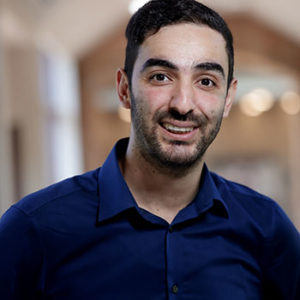
Prof. Majdi Radaideh leads the Artificial Intelligence and Multiphysics Simulations lab (AIMS), which focuses on the intersection between nuclear reactor design, nuclear multiphysics modeling and simulation, advanced computational methods, and machine learning algorithms to drive advanced reactor research and improve the sustainability of the current reactor fleet. AIMS extensively employs data science and machine learning … Read more
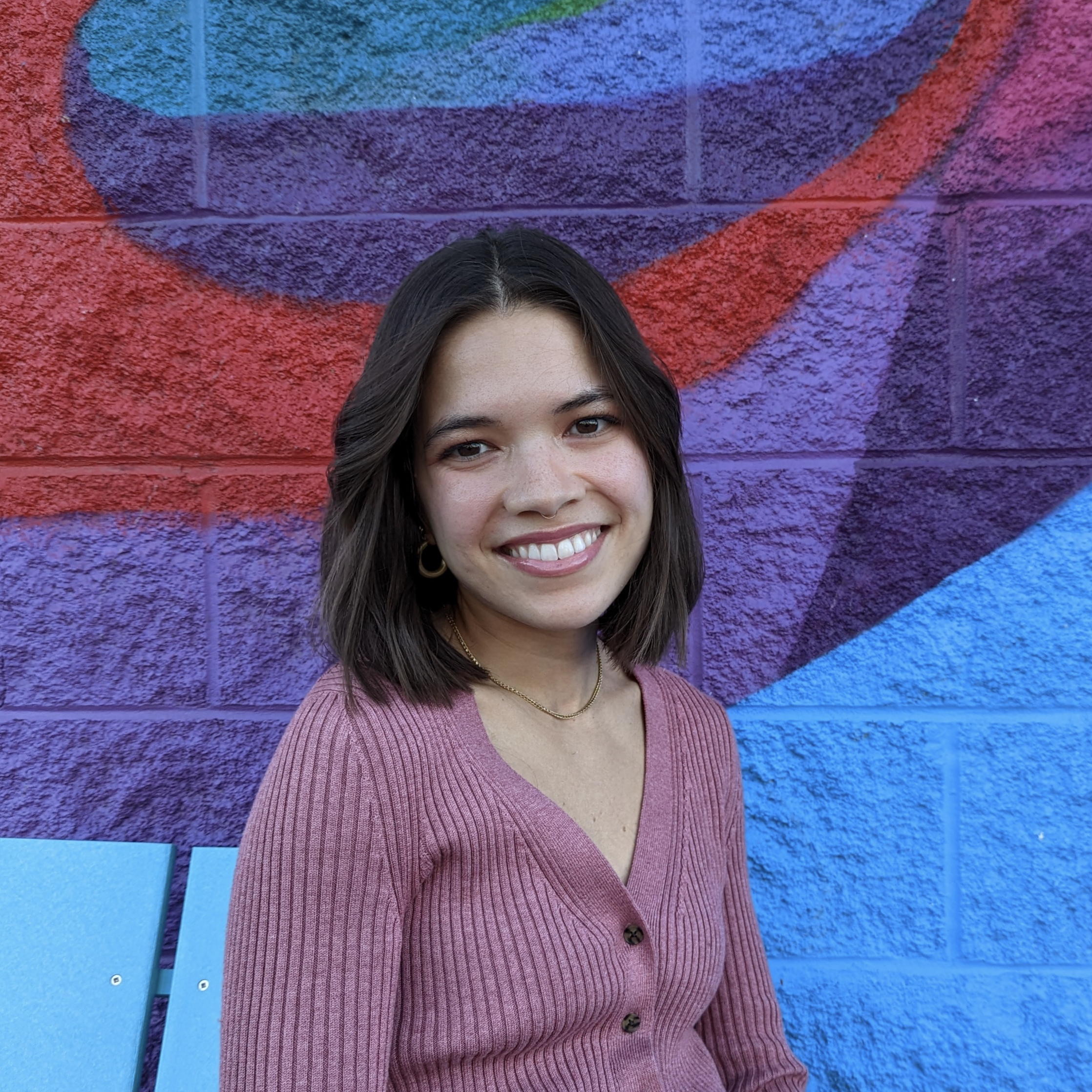
My research focuses on natural hazards and disaster information, everything from understanding where disaster data comes from, how it’s used, and its implications to design improved disaster information systems that prioritize the human experience and lead to more effective and equitable outcomes. My lab takes a user-centered and data-driven approach. We aim to understand user … Read more
Wei Hu is broadly interested in the theoretical and scientific foundations of modern machine learning, especially deep learning. His research aims to obtain a solid, rigorous, and practically relevant theoretical understanding of machine learning pipelines, as well as to develop principles to make them more reliable and efficient.
Mark Lindquist, ASLA, PhD, is an Associate Professor of Landscape Architecture. His research focuses on designing and evaluating high-performance landscapes with an emphasis on multifunctional green infrastructure in urban areas and leveraging AI for the creation and evaluation of these environments. He is particularly interested in understanding how engaging with computation, data, and virtual and … Read more
“Professor Revzen and his team at the Biologically Inspired Robotics and Dynamical Systems (BIRDS) Lab are working on discovering, modeling, and reproducing the strategies animals use when interacting with physical objects. This work consists of collaboration with biomechanists to analyze experimental data, developing new mathematical tools for modeling and estimation of model parameters, and construction … Read more
One branch of my research considers how to use data and models to improve manufacturing productivity. We look at how to capture streaming data from the factory floor, put it together with models encapsulated in “digital twins”, and use the predictions to better schedule production, plan maintenance, detect anomalies (including cyber-attacks), reconfigure the manufacturing system … Read more
The Computational Materials Physics group under the direction of Vikram Gavini focuses on developing computational frameworks and algorithms to enable large-scale ab-initio calculations for predictive materials simulations. The two main present thrusts of the group since 2020 are: (i) Developing fast and accurate large-scale density functional theory (DFT) calculations; (ii) Development of a computational framework … Read more
Comprehensive investigations of solar, interplanetary, and Earth’s Magnetospheric systems utilizing state-of-the-art in-situ observations and global simulations. The research topics of interest involve critical open science questions, including solar coronal heating, solar wind acceleration and heating processes, magnetospheric dynamics, and space weather predictions. The research tools include statistical data analyses to generate physics-based models. Accomplishments and … Read more
My research utilizes computational social science and artificial intelligence to derive contextually informed algorithmic frameworks for understanding individuals and the social systems which influence their behavior, and for supporting positive behavior change within these systems. In particular, I analyze policy and behavior, and apply interactive behavior support and predictive algorithms, within the areas of higher … Read more