
Elle O’Brien
Lecturer IV in Information and Research Investigator, School of Information
Tutorial Overview
Many scientists use AI coding tools through a browser — copying and pasting between chat and editor. Agentic tools like Claude Code work differently: they run on your machine, read your project, execute your code, and iterate on errors. This hands-on tutorial covers the pros and cons of using a coding agent and how to begin using Claude Code as an R programmer. We’ll look at potential use cases of coding agents for data analysis, improving code reproducibility, and tightening the loop between code outputs and manuscript writing.
Hands-on activities: Optionally, if you’d like to participate in hands-on exercises in the session, you may wish to purchase a Claude Code plan ($20 for a month of access) and have Claude installed on your computer. However, you may also come without doing this, or with a different agent (like OpenAI’s Codex or an open-source tool of your choice)
Reminder: All attendees, please bring a laptop.
About the Series
This tutorial series introduces practical ways researchers can use AI to support common stages of the research workflow. Designed as a hands-on learning experience, the series focuses on approachable, real-world applications rather than abstract theory. Each session will combine brief framing, live demonstrations, and guided practice so participants can explore how AI tools may help with tasks such as refining research questions, working with data, conducting early-stage analysis, checking outputs, and communicating findings responsibly. The goal is to help researchers develop useful habits for integrating AI into their work in thoughtful, transparent, and effective ways.
Parking/Accessibility
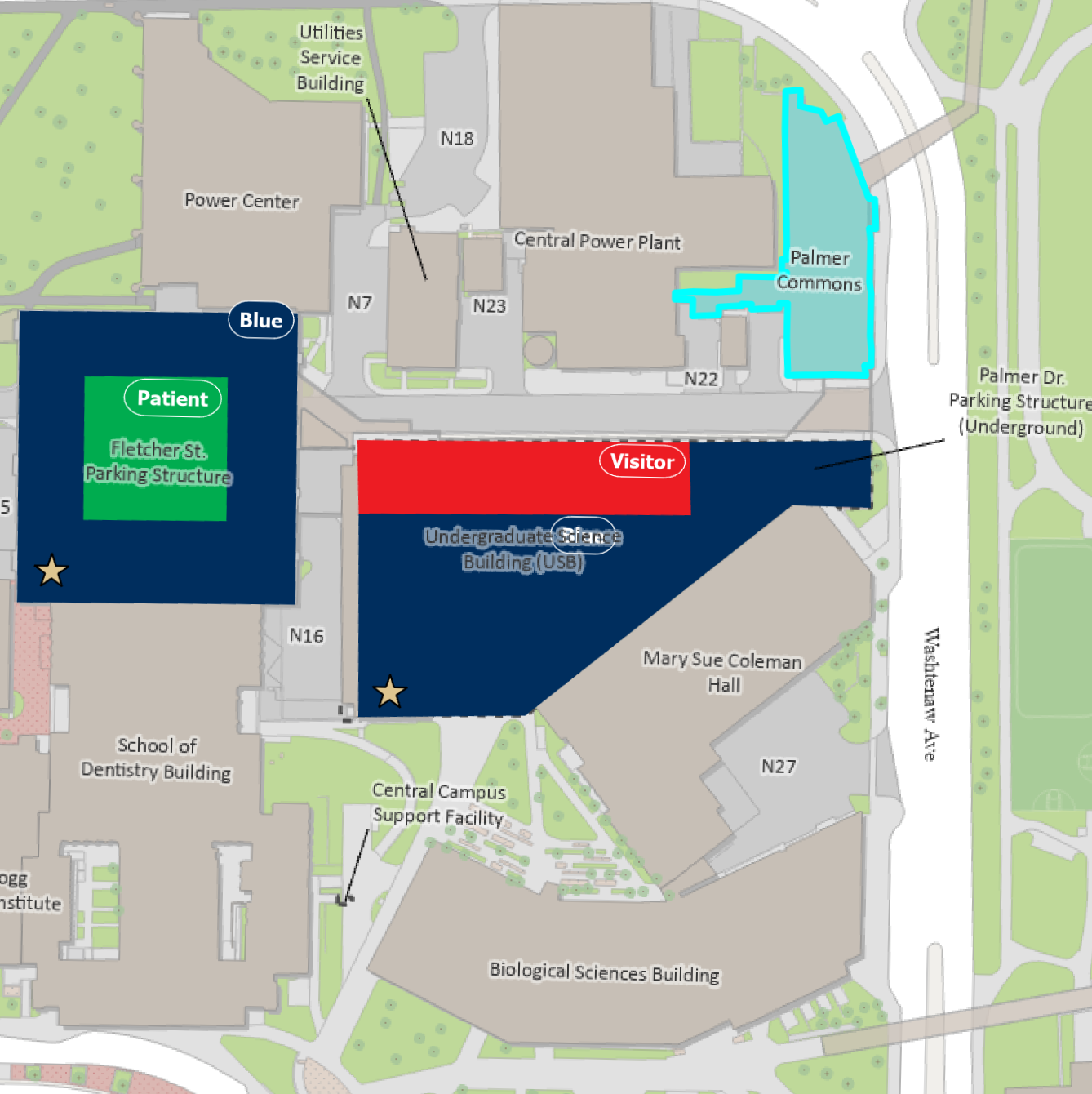
The Palmer Commons parking structure has pay-in-lane stations at two exit points that accept Visa, MasterCard, Discover, and American Express. Visitors may use QR-coded validation tickets provided by department hosts for discounted or complimentary parking.
Palmer Drive Parking Structure, Palmer Dr, Ann Arbor, MI 48104
For additional information regarding visitor parking at the Palmer Drive structure—located just west of Washtenaw Avenue—please visit the official University of Michigan Logistics, Transportation & Parking website at visitor and patient parking information.
For questions please message Kelly Psilidis: [email protected]