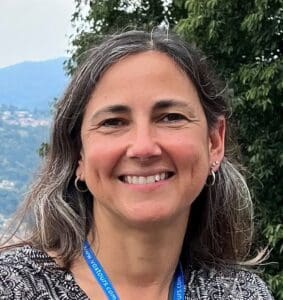
Survey Research Operations (SRO), as part of the Survey Research Center within the Institute for Social Research, is the largest academic-based survey research organization. As Director of SRO, I lead a unit that includes 170 full-time survey professionals, plus up to 700 interviewers who collect data from our centralized telephone facility here on campus, or from their homes across the U.S. We support cross-disciplinary social research data collection for researchers here at U-M, and from other universities and institutions across the country. We also support international researchers and projects, with a goal of helping to build research capacity using best practices of survey methodology. My own research interests include the use of advanced technical tools to assist the data collection process, especially the collection and reporting of "paradata" (information about the data collection process) to improve data-driven decision making; cross-cultural comparitive survey research, especially the application of best practices of language translation and cultural adaptation, and identifying the "best fit" approaches for diverse (LMIC) settings; and the collection of mental health data from general population samples, including the use of specialized tools that allow lay interviewers to administer questionnaires that generate validated mental disorder pravelence rates.
I co-direct the World Mental Health (WMH) Survey Consortium, which recently transitioned from Harvard to Michigan. I have been involved with the WMH Consortium since 1999 and was directly responsing for training researchers (mental health practitioners) from around the world to administer controlled, consistent data collection protocols resulting in nationally representative general population mental disorder prevalence rates from 40+ countries. For me, more important than even the prevalence rates, is the detailed information we collect on service use and treatment (both formal and informal/traditional) — allowing us to describe who is seeking treatment and, for those who are not, what the barriers to receiving effective treatment are.
The scientific contribution I strive to make is disseminating best practices in survey data collection and processing — taking advances made within my own well-resourced unit with the collaboration of professional survey staff and faculty and developing training and other resources that can be adopted in less-resourced settings.
In Survey Research Operations, we have created extremely sophisticated and robust "sample management" systems that facilitate the collection of high quality data across all modes (interviewer-administered, self-administered (web surveys), the linkage of administrative data, the tracking of biomarker samples, etc.). These tools not only allow us to collect the primary data, but they also capture hundreds of instances of "paradata" that allow us to track real-time progress and outcomes, and make data-informed decisions to ensure succesful field production. These tools have the capability to significantly increase efficiency and quality, especially the identification and reduction of multiple sources of error intrinsic to the survey process.