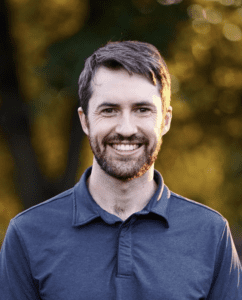
My computational pharmacology research program aims to develop and apply molecular simulation and artificial intelligence approaches to drive the discovery of small molecule biological probes and drugs. State of the art drug discovery pipelines involve complex screening, lead optimization, and pre-clinical and clinical evaluation of safety and efficacy, while simultaneously aiming to minimize the overall cost, time, and attrition. Our lab is developing data driven methods to accelerate discovery and center the decision-making process on computational modeling, leveraging molecular simulations, machine learning, and chemoinformatic data analysis to actively drive the design-make-test cycle. Key areas of research include characterizing the role of diverse experimental and simulation-based data to train molecular foundation models. Statistical modeling for high-throughput and high-content pharmacology, and drug-target identification through causal inference of cellular regulatory networks. Our computational lab collaborates broadly groups with ongoing projects in infectious disease, substance abuse disorder, and metabolic disorders.
Please describe one or two of your most interesting projects.
Docking to Novel Pockets: We are leveraging breakthroughs in protein design and ultra-large scale virtual screening to create a dense synthetic dataset of ligand receptor interactions. We are then using this as a pre-training task for molecular foundation models and to learn to represent molecules by their bioactivity. Key applications include developing cross-chemistry structure-activity models and efficient exploration of chemical space.
How did you end up where you are today? (Your research journey)
After my undergraduate degree in pure mathematics from the University of Chicago, I worked on data-driven optimization of the Rosetta molecular forcefield for my PhD in Computer Science at UNC Chapel Hill. From there I did my postdoctoral studies in chemoinformatics and virtual screening with Brian Shoichet at the University of Toronto and UCSF. I joined the University of Michigan in 2019 as a research faculty in DCMB and trasitioned to the tenure track in 2023 also in DCMB.
What makes you excited about your data science and AI research?
I am particulary excited about understanding the role of scientific data in large-scale foundation models. While scaling laws suggest that perofrmance across a broad range of tasks with increasing data, this provides little guidence on what data will be the most informative to collect. Filling this gap in AI research will require a deeper characterizion how models leverage data and the inductive biases in the architecture and training strategies to trasition from memorization to learning generalizable representations.