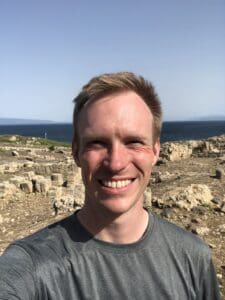
I am a Roman archaeologist and a specialist in developing and applying advanced digital technologies in the study of ancient material culture. My work enhances traditional archaeological methods by integrating tools such as databases, mobile computing and imaging hardware, artificial intelligence, sophisticated analytics, 3D modeling, geographic information systems (GIS), and remote sensing. These techniques allow archaeologists to document and analyze sites and artifacts with remarkable speed, precision, and richness, to share their discoveries more widely, and to preserve cultural heritage data more effectively.
I have published several articles and chapters on digital field recording and excavation databases. With regard to the ancient world, I have written on the urban industry, water management, and drainage infrastructure of a sub-elite neighborhood in Pompeii, as well as on the networks of knowledge that underpinned Roman industries.
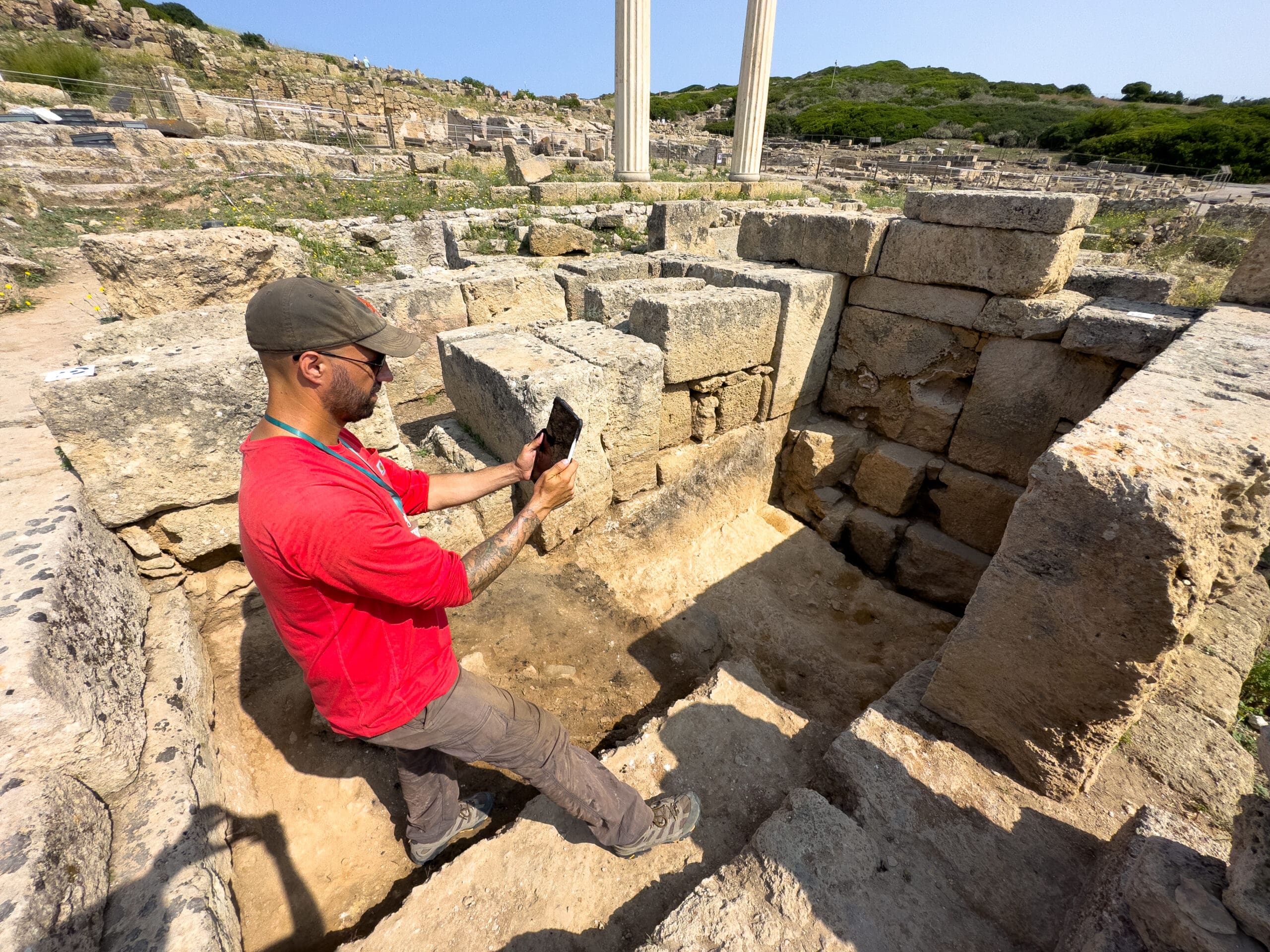
At the Kelsey Museum, I oversee the collections database, archives, and 3D capture project. I also support assorted other digital efforts, including faculty and graduate student research. In the field, I currently serve as Head of Data for excavations at the coastal Punic/Roman city of Tharros, Sardinia (Tharros Archaeological Research Project) and at Pompeii’s Porta Stabia neighborhood (Pompeii Archaeological Research Project: Porta Stabia). I have previously conducted fieldwork in Italy, Portugal, Spain, Morocco, France, Greece, Turkey, and Belize.
What is the most significant scientific contribution you would like to make?
Speaking very broadly, I want to improve how archaeologists handle data. Archaeological evidence is fragile, scarce, and non-renewable. Many of the methods we use in the field to gather evidence inevitably destroy information as part of the process, so we must capture as much data as we can during our work; this is both exciting and a little scary. But it’s really the people behind these items that excite me the most. Archaeology often deals most directly with people who are left out of the textual record: the thousands of everyday people whose activities created the (mostly mundane) objects and spaces we now study. They were not kings, queens, or generals, but their lives and experiences mattered just as much as yours or mine. What we uncover now is all that remains of them, and it is our privilege and duty to tell their stories as best we can. I take all these duties seriously, and I am always seeking ways to improve the quality of our documentation, the impact of our analyses, and the longevity of the record we leave behind.