Keynote Speakers
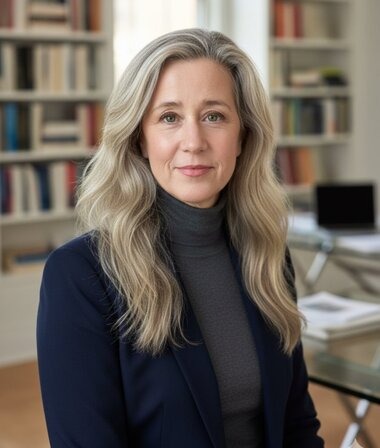
Katherine Elkins
Professor of Humanities & Comparative Literature · Kenyon College; Director, Integrated Program in Humane Studies · Founding Co-Director, AI CoLab / Human-Centered AI Lab
Bio
Katherine Elkins is co-founder of the Human-Centered AI Lab and leads the Modern Language Association team in the NIST AI Consortium at the Center for AI Standards and Innovation (CAISI), where she served on Working Group 5 on AI Safety. She is Principal Investigator of Archival Intelligence, a Schmidt Sciences–funded project building an open-source AI pipeline to preserve endangered cultural archives, and Professor of Humanities at Kenyon College. Since GPT-2 she has been testing how humanlike AI systems really are. She conducted the first writer’s Turing test of GPT-3 in 2020, and her 2024 ethics-based audit of frontier language models was recently named among the foundational works in LLM ethics evaluation. Her current research focuses on linguistic fragility, interpretive tractability, multi-agent debate, and cross-cultural value alignment in high-stakes AI decision-making. Her book The Shapes of Stories (Cambridge UP, 2022) introduced ensemble methods for diachronic sentiment analysis.
How Human is AI? Why AI Safety Depends on the Answer
Abstract
Ask a model whether a customer “should withdraw retirement savings early” or “should not keep savings locked up,” and some models will reverse their recommendation 80% of the time. The phrasing changed, but the meaning didn’t. Failures like this are invisible to standard benchmarks because every evaluation assumes an answer to a question we rarely ask out loud: how human is this system? Treat it as humanlike, and we imagine that failures attach to a coherent persona. Treat it as software, and we imagine that failures are deterministic. Since GPT-2, my collaborators and I have been answering the question empirically, from the first writer’s Turing test of GPT-3 to audits spanning more than 40,000 high-stakes decisions across 23 frontier and open-source models. Our results show models are often humanlike where we expect neutrality, and alien where we expect likeness. They are also unevenly fragile across deployment domains. I’ll tie these results to what they mean for AI evaluation and oversight, and why AI safety now depends on measuring how human these systems truly are.
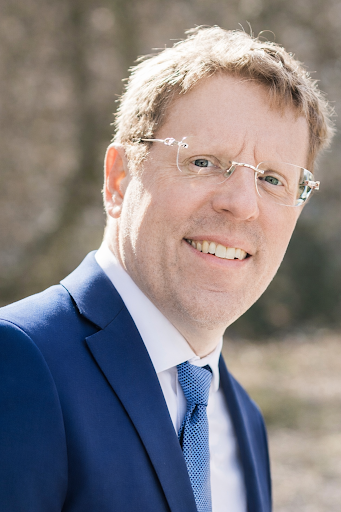
Neil Thompson, MIT
Principle Research Scientist, MIT
Bio
Dr. Neil Thompson is the Director of the FutureTech research group, and Principle Research Scientist at MIT’s Computer Science and Artificial Intelligence Lab (CSAIL), and at MIT’s Initiative on the Digital Economy (IDE) within the Sloan School of Management. Guided by Dr. Thompson’s leadership, the FutureTech group researches the cutting edge and most important trends driving progress in computing and AI, how these trends underpin scientific progress and economic prosperity, and produces rigorous insights that broaden humanity’s knowledge, and inform policy and industry decisions. Since founding MIT FutureTech in 2019, Dr. Thompson’s research group has attracted over $25M in funding, and has grown to be one of the largest research groups at MIT with over 110 researchers. Dr. Thompson maintains research partnerships with leading organizations such as Google, IBM, Amazon, Accenture, Microsoft, Los Alamos National Labs, and others.
Previously, Dr. Thompson served as an Assistant Professor of Innovation and Strategy at the MIT Sloan School of Management, where he co-directed the Experimental Innovation Lab (X-Lab), and as a Visiting Professor at the Laboratory for Innovation Science at Harvard University. Prior to his academic career, Dr. Thompson has held positions for esteemed organizations such as the Broad Institute, Bain and Company, Lawrence Livermore National Laboratory, AMD, the World Bank, the United Nations, and the Canadian Parliament.
Dr. Thompson’s work has over 3000 citations with an h-index of 21 across his publication portfolio, including such well known and renowned papers as Expertise, The Computational Limits of Deep Learning, and There’s plenty of room at the Top: What will drive computer performance after Moore’s law? Dr. Thompson has been invited to present his work and recommendations to Congressional Staffers (House and Senate), the US Federal Reserve, the Pentagon, National Security Staff, the Department of Commerce, the Department of Energy, Brookings Institute, and most recently presented at a World Summit on the same program as the Prime Minister of India and Former Prime Ministers of England and Australia. With experience in 80+ countries, Dr. Thompson’s research and impact is on a global scale.
Dr. Thompson has a PhD in Business & Public Policy from UC Berkeley, Haas, dual Master degrees’ in Computer Science and Statistics from UC Berkeley, and a Masters in Economics from London School of Economics and Political Science (LSE). From his undergraduate studies, Dr. Thompson has Bachelors degrees in Physics, Economics, and International Development studies from Queen’s University.
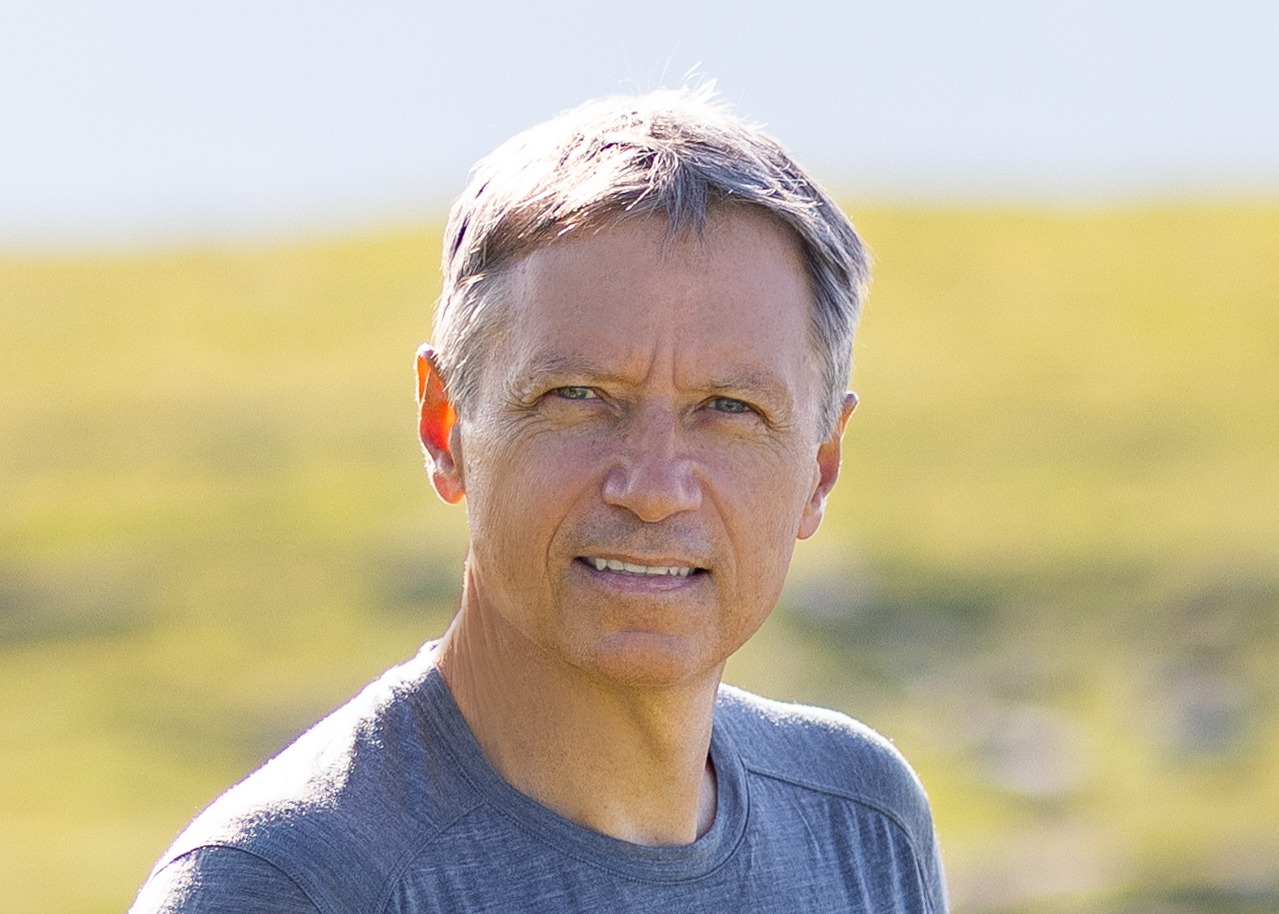
Raffaello D’Andrea
Professor at ETH Zurich; Founder and CEO, Verity
Bio
Raffaello D’Andrea is a professor at ETH Zurich, where he founded the Institute for Dynamic Systems and Control. His research focuses on embodied intelligence—the intersection of artificial intelligence, autonomous systems, and the physical world. He is the founder and CEO of Verity, a company that has created a mobile intelligence platform utilizing fleets of fully autonomous drones to eliminate inventory errors, generate actionable operational insights, and close the gap between digital systems and physical operations for global supply chain leaders like IKEA and Maersk.
Previously, D’Andrea co-founded Kiva Systems (now Amazon Robotics), where he architected the mobile robots and motion layer for warehouse logistics. The deployment of the system created at Kiva has since grown to over one million autonomous robots globally. He also co-founded the systems engineering program at Cornell University, where he led four RoboCup world championship teams as the program’s flagship project, and co-founded ROBO Global, creator of the world’s first robotics and AI ETF.
D’Andrea’s dynamic works are in the permanent collection of the National Gallery of Canada and have been exhibited at the Venice Biennale, and his TED talks on autonomous systems have garnered tens of millions of views. He has been inducted into the US National Academy of Engineering, the National Inventors Hall of Fame, and the Logistics Hall of Fame. His engineering philosophy is anchored in simplicity and robustness—principles that have enabled his systems to operate at global scale. Despite a career building the future of autonomy, he describes himself not as a techno-optimist, but as a technological realist.