This workshop is sponsored by Schmidt Sciences

About Uncertainty Quantification (UQ)
What is UQ in the Era of AI?
Artificial Intelligence (AI) is revolutionizing scientific discovery and engineering designs, from modeling nuclear fusion to designing new drugs. But modern AI models are often “black boxes”. To fully integrate these tools into scientific workflows, it is not enough to get a prediction; we must understand the confidence behind it.
Classical uncertainty quantification (UQ) methods were built for simpler mathematical models. As we deploy complex AI systems in the real world, we need a new toolbox of methods to ensure reliability. In high-stakes domains like medical diagnosis and autonomous vehicles, UQ allows systems to recognize their own incompetence—preventing catastrophic failures before they happen. In resource-heavy fields like material science, UQ guides researchers toward the experiments that matter most, generating reliable insights even from scarce data.
Our Mission
The rapid adoption of AI in science and engineering (AI4SE) has outpaced the development of tools to verify its reliability. Our mission is to bridge UQ experts and domain scientists / engineers to collaboratively close this gap. By fusing rigorous theory with real-world scientific data, we aim to transform AI from a black box into a robust, interpretable engine for scientific discovery and engineering designs. To achieve that, we provide a structured collaborative environment where theorists can access real-world scientific datasets, and scientists can acquire the “UQ toolbox” needed to make their AI models trustworthy.
Overview
The UQ Incubator is more than a series of lectures—it is a launchpad for cross-disciplinary innovation. Hosted at the University of Michigan, this three-day event brings together two critical communities: UQ experts, who develop rigorous mathematical methods, and domain scientists / engineers, who apply AI to complex problems in science and engineering.
Program Highlights
- Knowledge Building: Keynote lectures and tutorials designed to build a shared language between UQ experts and domain scientists. We move beyond passive listening with gamified peer-learning sessions that ensure bidirectional fluency from Day 1.
- Collaborative Prototyping: Unlike a standard conference, this is a research sprint. The event is structured in two phases:
- The Match (Days 1-2): Structured speed-networking and poster sessions help you find your ideal teammates — whether a domain scientist with data or a UQ expert with solid methods and coding skills.
- The Sprint (Days 2-3): Once teams are formed, the clock starts. You will have 24 hours to “hack” a research question on-site, moving from concept to preliminary prototype in real-time.
- Seed Funding: We are committed to supporting sustained impact. At the end of the sprint, teams will pitch their research prototypes. Up to 10 teams will be awarded $2,500 research grants to fund post-event travel and publications, ensuring that the collaborations formed here continue to grow.
Speakers
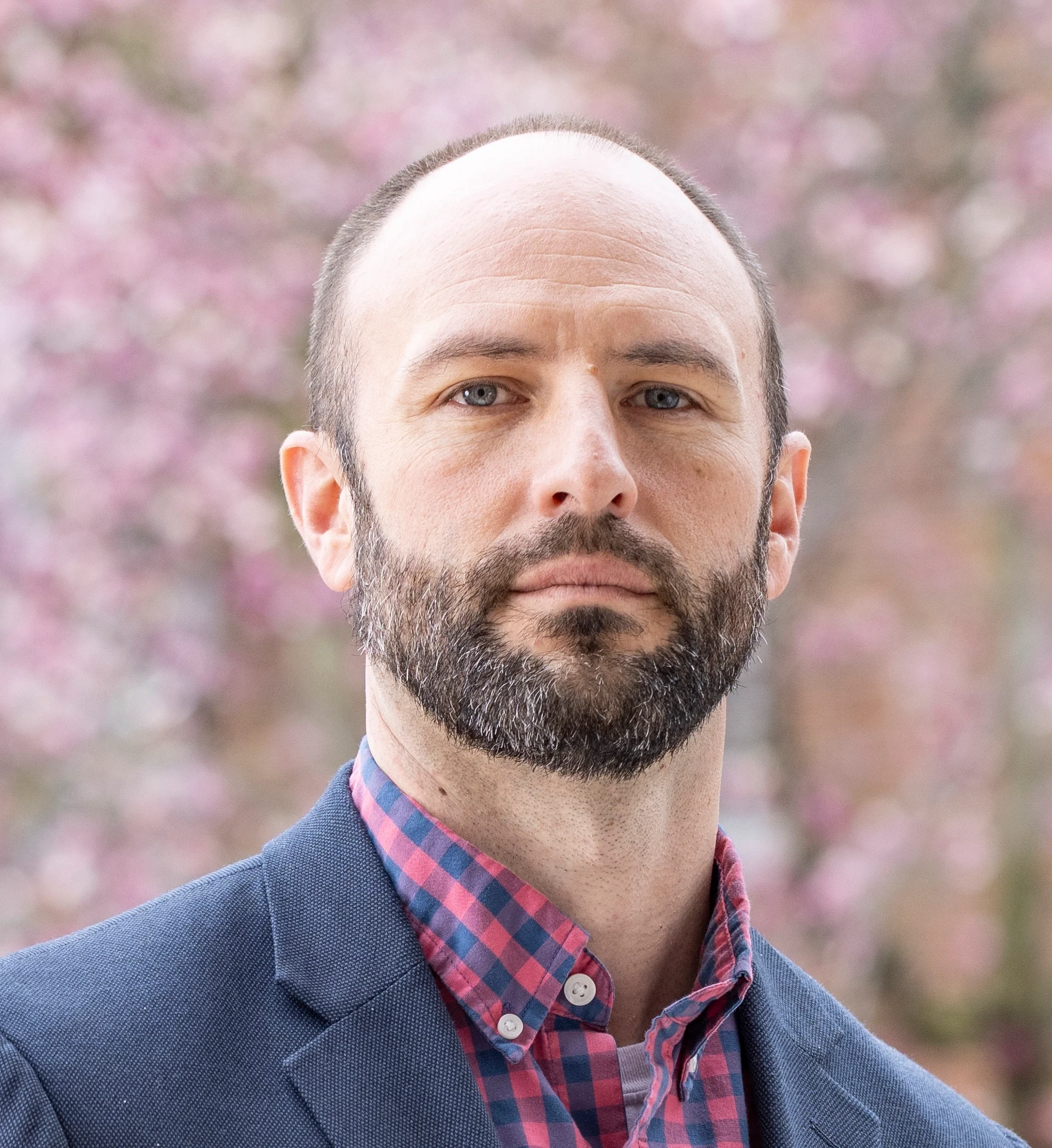
Michael Shields
Professor, Department of Civil & Systems Engineering, Johns Hopkins University
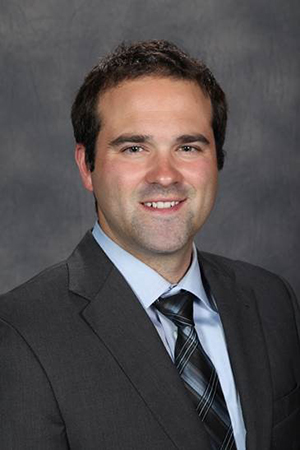
Douglas Allaire
Associate Professor, Mechanical Engineering, Texas A&M University
Yang Chen
Associate Professor of Statistics, University of Michigan
Tutorial Presenters
Dr. Guanzhou Wei
Assistance Professor, Department of Industrial and Manufacturing Systems Engineering, Iowa State University

Zihan Li
Ph.D. Candidate, Department of Industrial & Systems Engineering, University of Florida
Schedule
1:00 PM – 2:15 PM
Wolverine Room
Tutorials (Optional)
Speaker: Dr. Guanzhou Wei
Title: Statistical Learning for Advection–Diffusion Processes with Applications to Wildfire Smok
Physical advection–diffusion processes arise in many scientific and engineering applications, including atmospheric transport and wildfire smoke propagation. This talk presents statistical learning frameworks that integrate physical dynamics with data-driven inference for modeling such processes. We first illustrate a physics-informed approach for wildfire smoke modeling, where latent spatio-temporal states are inferred from multi-source satellite data. We then develop a symmetry-based framework for advection–diffusion processes on bounded domains, addressing limitations of standard spectral methods under non-periodic boundary conditions. The proposed approach enables efficient spectral state-space representations and scalable inference for complex physical systems.
2:15 PM – 2:45 PM
Wolverine Room
Break & Social
2:45 PM – 4:15 PM
Wolverine Room
Peer Learning Games (Optional)
Speaker: Zihan Li
Title: Conformal prediction for Uncertainty Quantification in Industrial Engineering
Conformal prediction (CP) provides a principled framework for uncertainty quantification with finite-sample guarantees, offering distribution-free prediction intervals that achieve a user-specified coverage level under minimal assumptions. This lecture introduces the fundamental concepts of CP, including nonconformity measures, calibration procedures, and the construction of prediction sets for regression and classification tasks.
4:15 PM – 5:00 PM
Wolverine Room
Break & Social
5:00 PM – 6:00 PM
Wolverine Room
Opening Remarks & Reception
6:00 PM – 9:00 PM
Wolverine Room
Dinner
8:30 AM – 9:00 AM
Wolverine Room
Breakfast
9:00 AM – 10:00 AM
Wolverine Room
Keynote Lecture I
Speaker: Prof. Michael Shields
Title: Why do we need to know UQ when we have AI?
Artificial Intelligence, primarily in the form of huge transformer-based Large Language Models (LLMs), has been a disruptive technology in nearly every professional discipline – none more so than in academia. Graduate students and other researchers now use AI coding agents like Claude Code, Codex, VS Code and others to automate coding tasks (and increasingly complex workflows) to develop code in minutes that used to take days or weeks. In this talk I will demonstrate that AI can, in fact, plan, code, and execute a wide range of uncertainty quantification (UQ) tasks. This begs several, perhaps existential, questions. If AI can do UQ, why do we need to learn it? Will there be a need for ongoing UQ research? In the future of UQ, what will be the role of human scientists/engineers/researchers and AI agents? Starting from a baseline of current AI capabilities in UQ, we explore these questions – offering perspectives on how AI has the potential to rapidly accelerate UQ pursuits, while also offering cautions on becoming too reliant on it.
10:00 AM – 10:30 AM
Wolverine Room
Coffee Break & Social
10:30 AM – 12:15 AM
Wolverine Room
Speed Networking Session I
12:15 PM – 1:15 PM
Wolverine Room
Lunch & Social
1:15 PM – 2:45 PM
Anderson Room ABC
Poster Session I
2:45 PM – 3:15 PM
Anderson Room ABC
Coffee Break & Social
3:15 PM – 4:00 PM
Anderson Room ABC
Debrief, Social, & Team Formation Updates
4:00 PM – 5:30 PM
Campus Tour & Social
8:30 AM – 9:00 AM
Wolverine Room
Breakfast
9:00 AM – 10:00 AM
Wolverine Room
Keynote Lecture II
Speaker: Prof. Douglas Allaire
Title: From Uncertainty to Discovery: Decision-Aware Bayesian Methods for Autonomous Materials Design
Designing high-entropy alloys for extreme environments requires searching a combinatorial composition space that is too vast for exhaustive experimentation and too complex for first-principles prediction alone. This talk presents a Bayesian discovery framework demonstrated through a physical multi-iteration campaign on a six-element refractory alloy system, where multi-objective batch Bayesian optimization and entropy-based constraint learning together reduced the experimental burden by orders of magnitude. I then address foundational questions lurking beneath these methods, asking whether we can certify that the acquisition function was actually maximized and whether we can extract confident decisions earlier in expensive simulation chains. I close by sketching a vision for an autonomous robotic metallurgist and the uncertainty quantification challenges that must be solved before such a system can be genuinely trusted.
10:00 AM – 10:30 AM
Wolverine Room
Coffee Break & Social
10:30 AM – 12:15 AM
Wolverine Room
Speed Networking Session II
12:15 PM – 1:15 PM
Anderson Room ABC
Lunch & Social
1:15 PM – 2:45 PM
Anderson Room ABC
Poster Session II
2:45 PM – 3:15 PM
Wolverine Room
Coffee Break & Social
3:15 PM – 4:15 PM
Wolverine Room
Team Discussions
4:15 PM – 6:00 PM
Wolverine Room
Prototyping
8:30 AM – 9:00 AM
Koessler Room
Breakfast
9:00 AM – 10:00 AM
Koessler Room
Keynote Lecture III
Speaker: Prof. Yang Chen
Title: Uncertainty quantification to Tensor Completion with Applications to Physical Sciences
Tensor completion is increasingly important in the physical sciences for reconstructing incomplete multiway data, but reliable uncertainty quantification is essential for scientific interpretation. In this talk, we first present a debiased low-tubal-rank inference method that constructs asymptotically valid confidence intervals for linear functionals of the completed tensor, enabling formal statistical inference from noisy partial observations. We then describe a conformalized tensor completion framework that provides distribution-free prediction intervals under dependent missingness, built on scalable Riemannian optimization and designed for heterogeneous data. Together, these two approaches offer a practical, statistically principled toolkit for uncertainty-aware tensor reconstruction, with applications to geophysical problems such as completing a global total electron content map.
10:00 AM – 10:30 AM
Koessler Room
Coffee Break & Social
10:30 AM – 12:15 PM
Koessler Room
Prototyping
12:15 PM – 1:15 PM
Koessler Room
Lunch & Social
1:15 PM – 3:30 PM
Koessler Room
Prototyping
3:00 PM – 3:30 PM
Koessler Room
Coffee Break & Social
3:30 PM – 5:30 PM
Koessler Room
Final Presentations
5:30 PM – 6:00 PM
Walk to Downtown Ann Arbor
6:00 PM – 9:00 PM
Reception
Knight’s Steakhouse Downtown
600 E Liberty St, Ann Arbor, MI 48104
Attendees
Who Should Attend?
The workshop is open to the public and aims to host up to 30 external participants, with priority given to Schmidt AI in Science Fellows and alumni. Ideal attendees include postdoctoral researchers, early-career faculty members, and senior PhD students who are:
- Domain Scientists / Engineers seeking to make their AI-driven research more robust and interpretable, with strong research interests in applying rigorous UQ analysis and algorithms to scientific and engineering problems, including but not limited to biology, chemistry, physics, climate, environmental science, engineering, computer science, and any related field.
- UQ Experts looking for high-impact, real-world problems to drive their methodological research, who are enthusiastic about integrating domain knowledge, including equations, process-based models, and theory, into machine learning and statistics.
Application
Applications are now closed. We appreciate the interest in the UQ Incubator!
Application link here
Application deadline: March 31
All applications received before the deadline will receive full consideration. To ensure a fair and timely review process for all applicants, we are unable to accept submissions past the deadline.
Application Form
- Basic information and research expertise: domain and UQ expertise, self-assessment on familiarity with AI/ML and coding.
- CV: an up-to-date curriculum vitae or resume.
- Statement of purpose: a paragraph of 200-250 words that outlines your vision and intended contributions to the event.
- Logistics: accommodation requests, travel grants, and dietary restrictions.
Poster: All attendees are required to present a poster to facilitate team formation. Please be prepared to submit a tentative title and a short abstract (200-250 words) in the application form.
- For domain scientists / engineers: we recommend that you describe your research question and the data you plan to bring, as well as the data access and availability to your potential collaborators through this event.
- For UQ experts: we recommend that you describe your area of expertise and provide references to papers or code repositories.
Logistics
Days 0-2 (May 31-June 2)
Michigan Union, 3rd Floor Wolverine Room and 1st Floor Anderson Room ABC
530 S State St
Ann Arbor, MI 48109
Day 3 (June 3)
Michigan League, Koessler Room
911 N University Ave
Ann Arbor, MI 48109
Graduate by Hilton Ann Arbor
615 E Huron St
Ann Arbor, MI 48104
Breakfast and lunch will be provided at the Michigan Union/League.
Dinner will be on your own. Participants will receive a reimbursement (up to a specified amount) at the end of the workshop. Please follow the reimbursement instructions in the handbook.
- Four nights of accommodation (for non U-M participants) from May 31st to June 3rd at the Graduate Hotel.
- All participants are invited to the welcome dinner on May 31st, from 5:00 to 9:00 PM, in the Wolverine Room at the Michigan Union.
- All participants are invited to the reception on June 3rd, from 6:00 to 9:00 PM, in downtown Ann Arbor. (Exact location TBD)
- All meals during the workshop.
- Workshop swags to be released later.
- Travel awards subject to availability.
- Travel: Participants are expected to pay for their own travel. There are a limited number of travel awards. Please indicate in the application form if you hope to be considered.
- Travel Insurance: Participants are encouraged to buy their own travel insurance.
- All other items not mentioned in the “What’s Covered” section.
Organizers
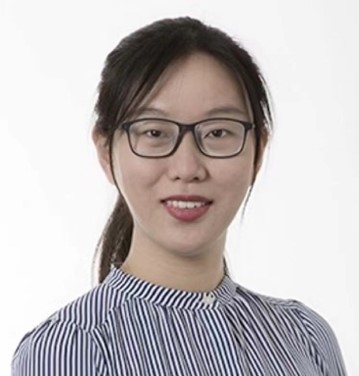
Xinyu (Cindy) Liu
Schmidt AI in Science Fellow, 2024 Cohort
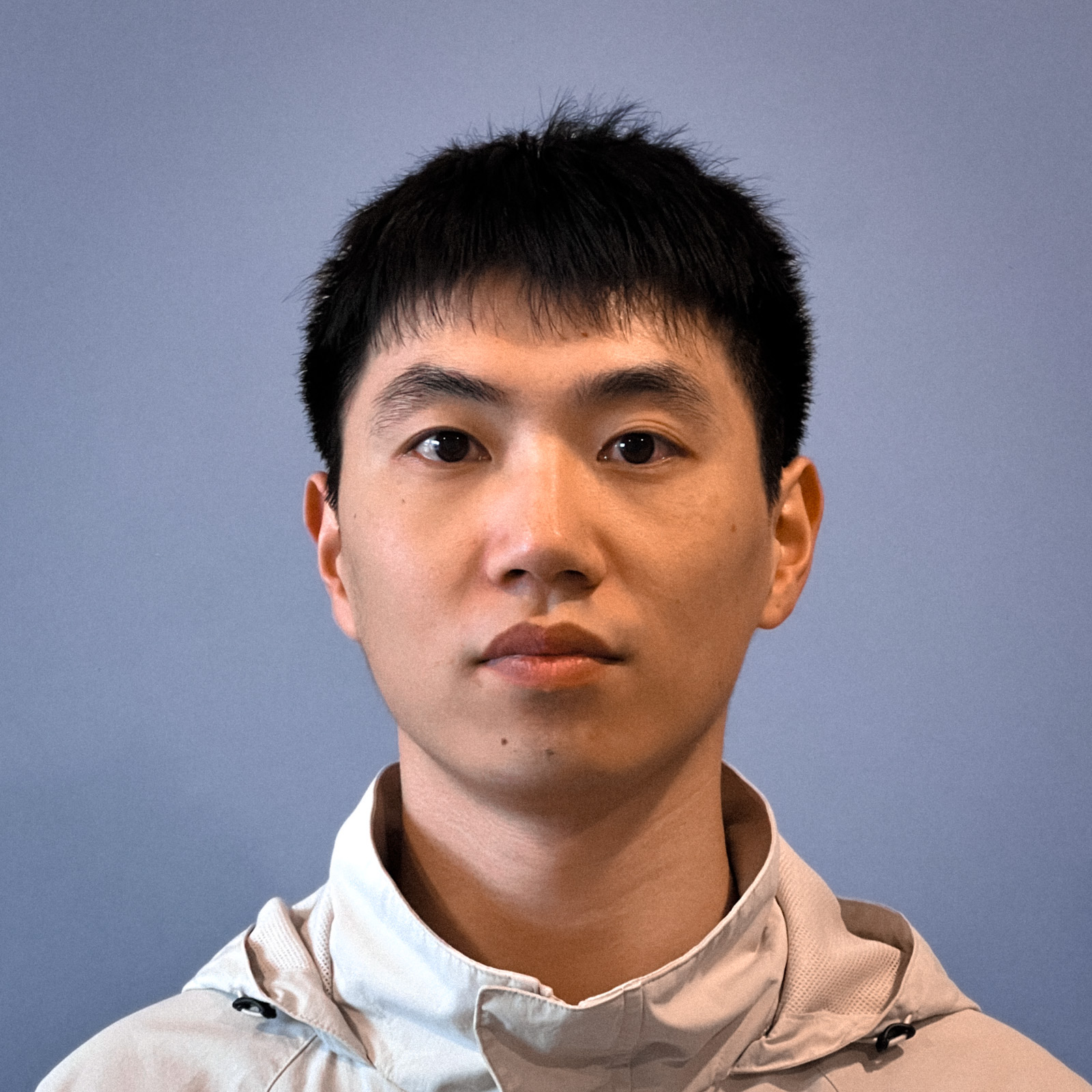
Zheng Guo
Schmidt AI in Science Fellow, 2024 Cohort
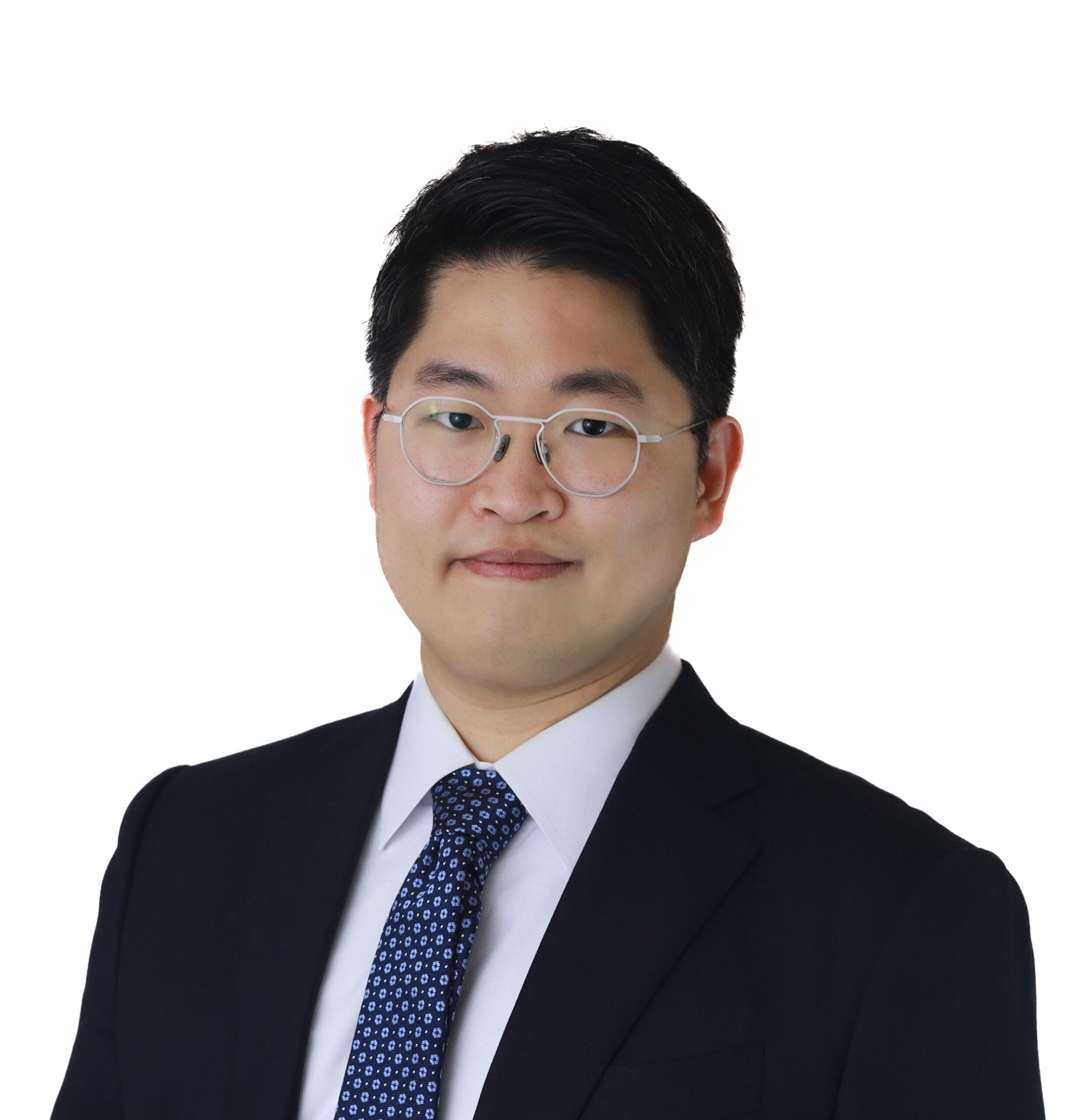
Eunjae Shim
Schmidt AI in Science Fellow, 2024 Cohort
Onsite Volunteers
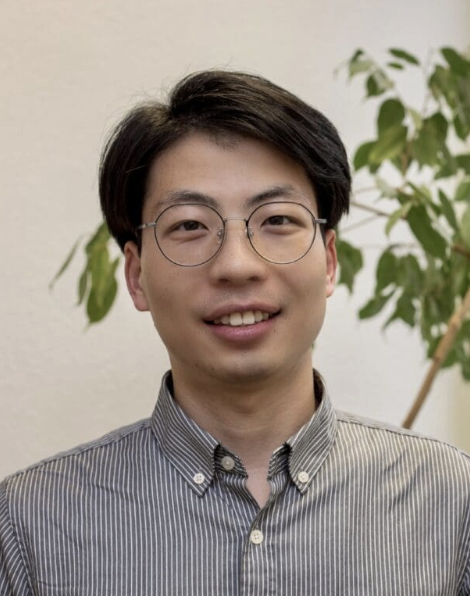
Zhiwei Wang
Postdoctoral Affiliates Fellow, 2025 Cohort
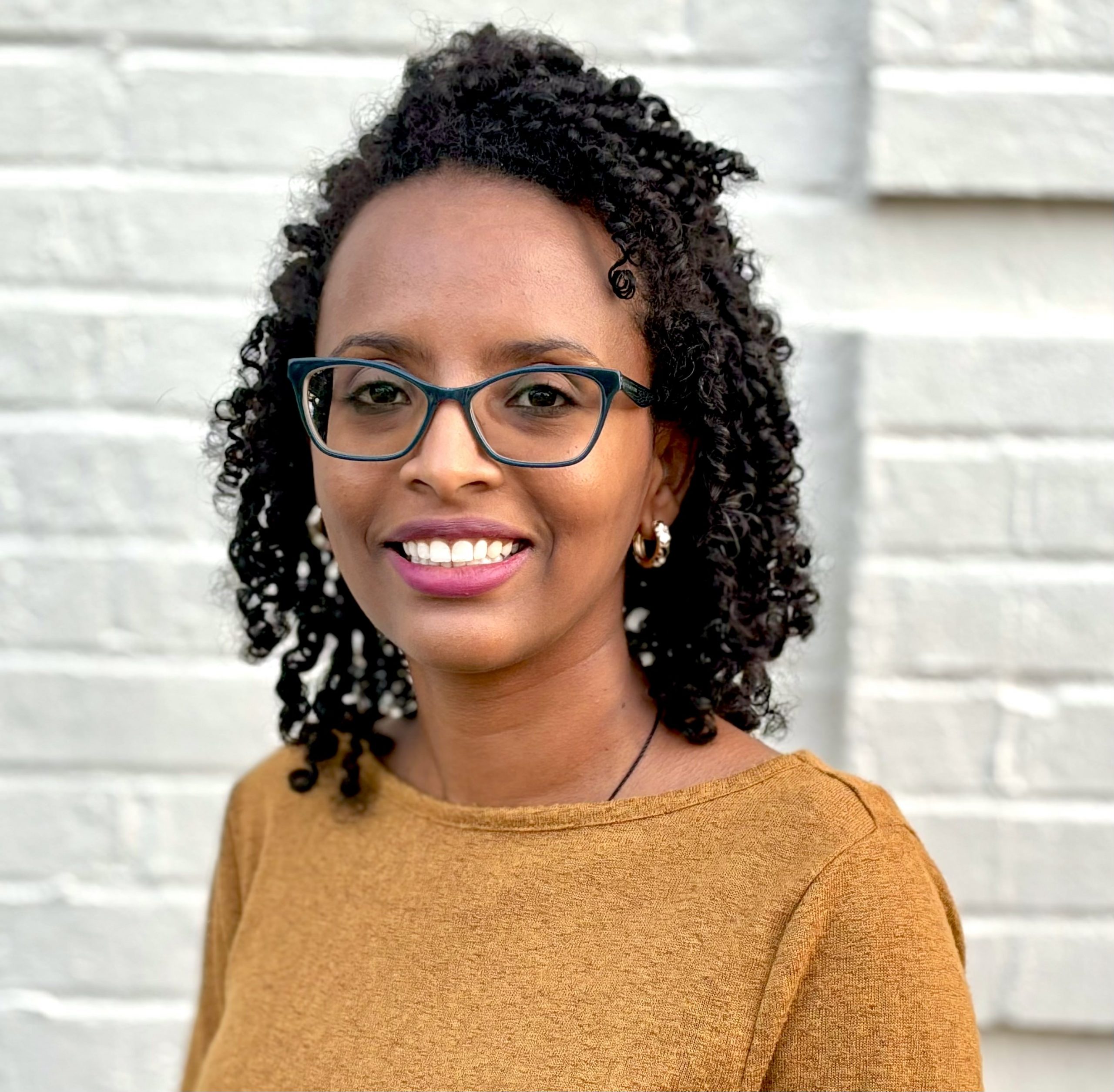
Tsige Atilaw
Schmidt AI in Science Fellow, 2024 Cohort
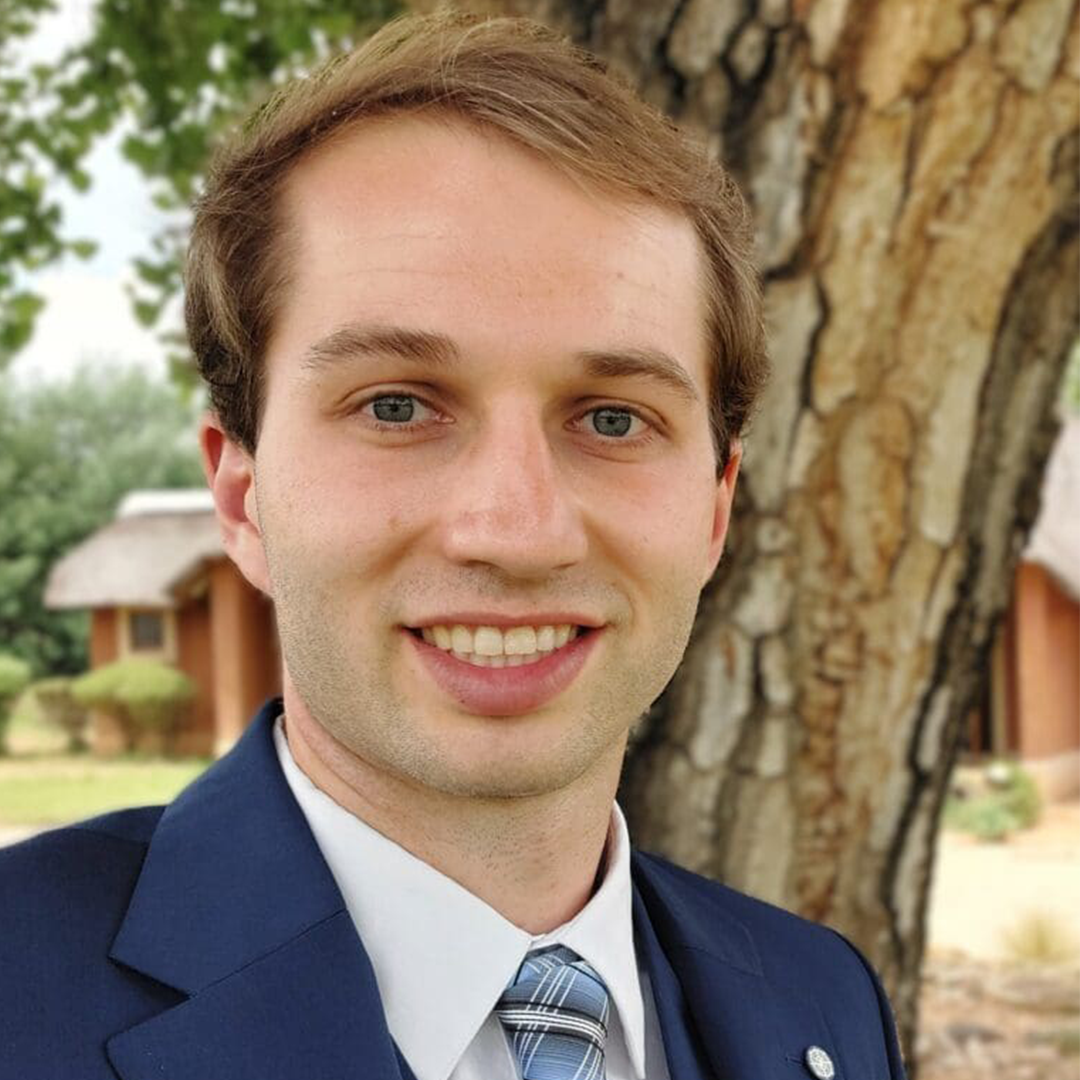
Seth Temple
Schmidt AI in Science Fellow, 2024 Cohort
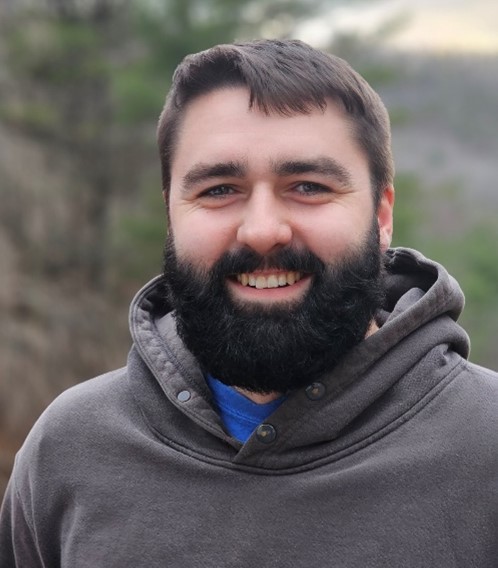
Kaiser Arndt
Schmidt AI in Science Fellow, 2025 Cohort
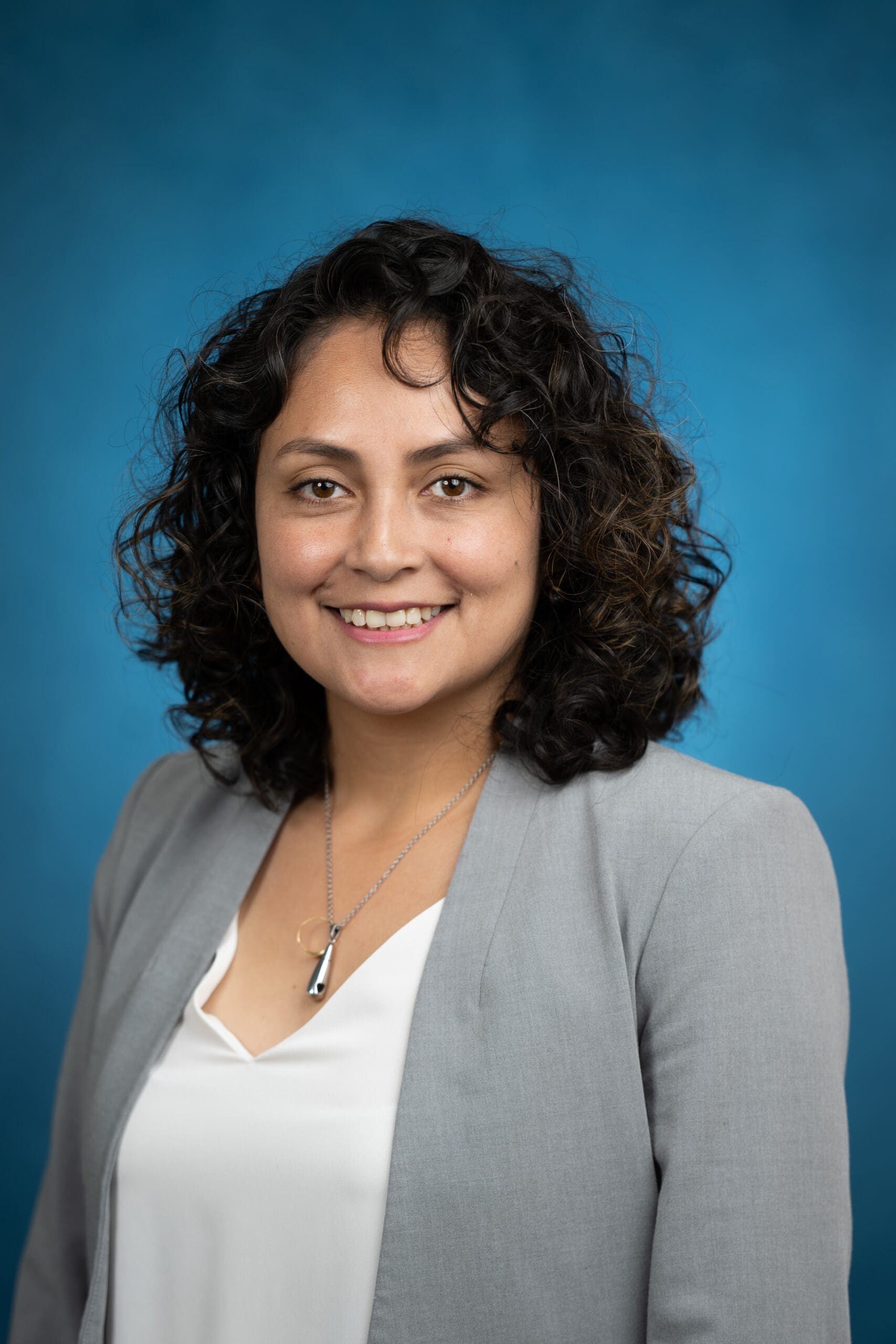
Carla Nathaly Villacís Núñez
Schmidt AI in Science Fellow, 2025 Cohort
Frequently Asked Questions
Do I need to have a team before I apply?
No. One of the main goals of the incubator is collaboration-building. We have designed specific activities—including speed-networking and poster sessions—to help you find teammates on-site. We prioritize organic team formation during the event rather than pre-assigned groups. Meanwhile, you will get to know your fellow participants before the event through the program handbook.
How do Speed Networking and Poster Sessions work together?
We designed these two activities as a connected “funnel” for team formation:
- Poster Session (The “Deep Dive”): This serves as a continuation of your networking conversations. Once you identify potential collaborators during speed networking, you can visit their posters to examine their specific data sets or methodologies in detail.
- Speed Networking (The “Icebreaker”): This is your chance to cast a wide net. You will have rapid, structured interactions to quickly pitch your skills or research interests to every other attendee.
In summary, you will use the speed networking to find who to talk to, and the poster session to confirm what you can build together before forming a team.
What if I don’t have a data set?
Having a well-thought research question and a data set will help you stand out as an applicant. If you are a UQ expert, you can join a team led by a domain scientist who has data. Additionally, we will provide a list of “candidate UQ papers with open data” for teams that wish to focus on reproducing or analyzing existing benchmarks.
What is the “Prototyping” session?
Unlike a standard conference where you just listen to talks, this event is hands-on. You will spend a significant portion of the time in Breakout Groups (Days 2 & 3), working with your team to code, analyze data, and develop a preliminary research prototype.
What happens after the event?
We aim for long-term impact. Teams that demonstrate high potential will be eligible to compete for Research Awards (up to $2,500 per team). This funding is specifically designed to support continued collaboration, covering future travel and/or publication expenses to disseminate and promote your collaborative research outcomes from this event.
Will there be tutorials for beginners?
Yes. We are offering an optional pre-event tutorial day (Day 0) featuring introductory lectures on UQ and coding exercises. This is designed to level the playing field so that domain scientists and theorists can collaborate effectively.
Is there a registration fee?
No, there is no fee for registration.
Is travel funding available?
Yes. We have a limited number of travel awards available. These are both need- and merit-based. You can indicate your need for travel support directly in the application form.
What is the vibe of the event?
Collaborative and active. We use networking bingo, interest stickers, and speed-networking to make meeting people easy and awkward-free. Whether you are a senior theorist or a new fellow, you will be actively working with others, not just sitting in an audience.
More questions? Contact us at [email protected]