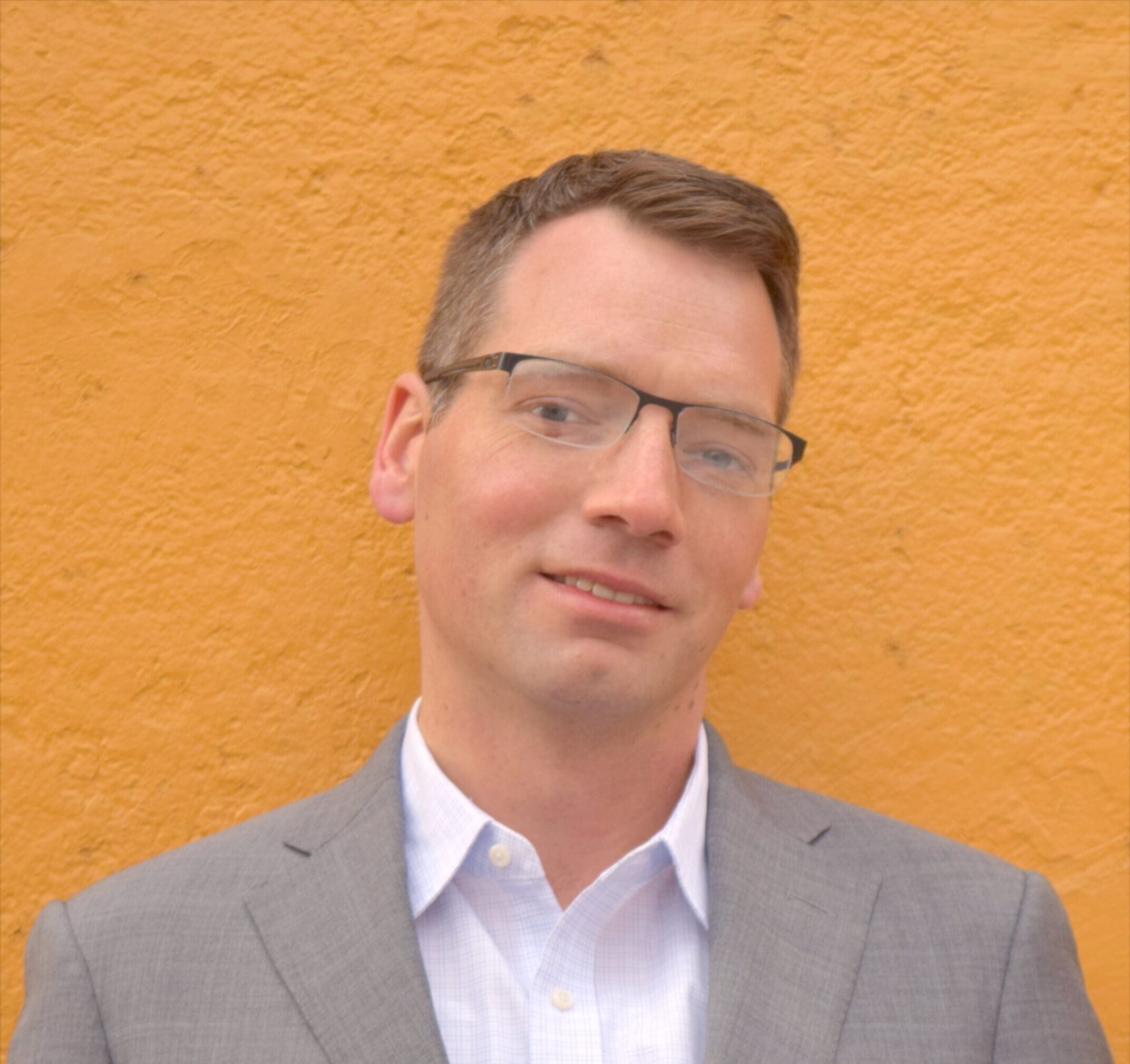
Timothy Cernak
Associate Professor of Medicinal Chemistry, College of Pharmacy and Associate Professor of Chemistry, College of Literature, Science, and the Arts
Bio
The Cernak Lab studies the interface of chemical synthesis and computer science. The functional and biological properties of a small molecule are encoded within structure, so synthetic strategies that access diverse structures are paramount to the invention of novel functional molecules such as biological probes, materials or pharmaceuticals. We use algorithms, robotics and big data to invent new chemical reactions, synthetic routes to natural products, and small molecule probes to answer questions in basic biology. Our lab employs informatics in reaction discovery, total synthesis, cell imaging and medicinal chemistry studies. Researchers in the group learn high-throughput experimentation, basic coding, and modern synthetic techniques. By studying the relationship of chemical synthesis to functional properties, we pursue the opportunity to positively impact human health.
Abstract
Chemical synthesis and data science are increasingly intersecting with some of the most urgent challenges in environmental health and One Health. Molecules and the methods we use to create them are naturally represented as networks, allowing us not only to streamline drug and natural product discovery but also to address broader ecological and public health problems.
In this seminar, I’ll share our latest work on automated synthesis and the development of new amine-acid cross-coupling reactions, as well as how computer-assisted chemistry is illuminating pathways to medicines and natural products with applications ranging from human health to wildlife conservation. We are exploring a combinatorially rich reaction space, where synthetic routes, reaction conditions, and bioactivity are deeply interconnected. Our interests span from pharmaceutical innovation to contemporary ecosystem health crises affecting endangered species and disease resistance.
This approach, which we call conservation chemistry, integrates molecular sciences with ecological and public health perspectives. I will present examples from our lab, including collaborative projects aimed at creating sustainable interventions for threatened ecosystems and species, illustrating how molecular innovation can benefit researchers and students across the natural and health sciences.
Parking/Accessibility
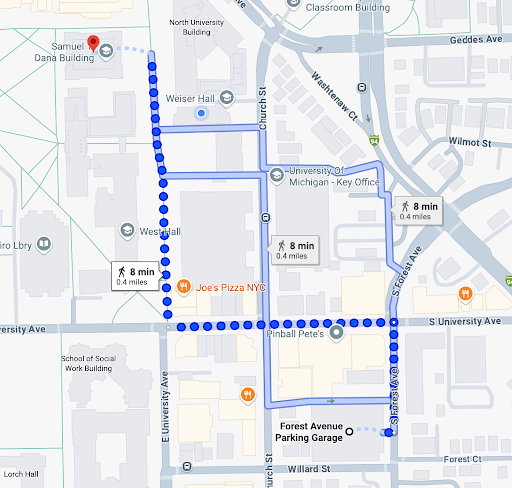
The closest public parking garage to the Samuel T. Dana building is the Forest Ave. Parking Garage located at 650 S Forest Ave, Ann Arbor, MI 48104.
Forest Ave. Parking Garage located at 650 S Forest Ave, Ann Arbor, MI 48104.
For guidance on directions, U-M faculty/staff parking, and accessibility, please visit: https://maps.studentlife.umich.edu/building/samuel-trask-dana-building
This series is co-sponsored by the School for Environment and Sustainability


Please reach out to Ben Surgalski ([email protected]) with any questions.