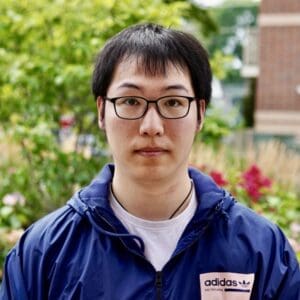
I work in applied and computational mathematics, with a particular focus on numerical analysis in areas such as quantum computing, machine learning, and data science. A central theme of my research is developing a deep mathematical understanding of existing algorithms and designing new, principled ones. My interests span a broad range of topics in quantum computing and machine learning, such as quantum eigenvalue estimation, signal processing, quantum and classical optimization and sampling, and mean-field analysis.
I proposed the first quantum algorithm, QCELS, which solves the quantum phase estimation problem with significantly reduced circuit depth and qubit requirements, while still achieving optimal quantum computational complexity. Building on the classical–quantum co-design principles underlying QCELS, many new algorithms have since been developed, deepening our understanding of the power of quantum algorithms for phase estimation and marking a concrete step toward early fault-tolerant quantum computing.
I provided the first rigorous analysis establishing the optimality of the linear-algebra–based signal processing algorithm ESPRIT, which remains a standard method in classical signal processing. Despite its widespread use, the theoretical foundations of ESPRIT in high-noise regimes were poorly understood. I addressed this gap by applying advanced matrix perturbation theory, proving that ESPRIT retains its optimality even in the presence of large signal noise. This result not only explains the algorithm’s strong empirical performance but also clarifies the conditions under which ESPRIT can be reliably applied.
I completed my PhD in the Department of Mathematics at the University of Wisconsin–Madison, where my research focused on theoretical machine learning, particularly the use of mean-field analysis to understand and develop large-scale algorithms. After graduating in 2013, I joined the Department of Mathematics at UC Berkeley as a Morrey Visiting Assistant Professor, where I shifted my focus to quantum computing. During my three years at Berkeley, I developed several new quantum algorithms by integrating ideas from classical areas such as signal processing, optimization, and Markov Chain Monte Carlo methods. In Fall 2025, I joined the Department of Mathematics at the University of Michigan, motivated by a continued passion for advancing research in both quantum computing and machine learning.