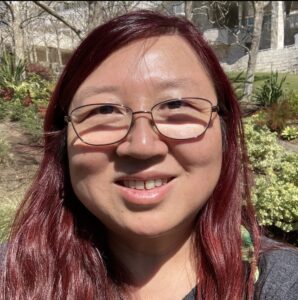
What I do: AI and data science have become a major force to transform science and society. I want to achieve three goals: 1) Lifting the boat: Enabling the transformation of the research and innovation model in this new era. 2) Reaching for the stars: Fostering truly revolutionary research discoveries. 3) Technology for the people and by the people: Catalyzing the use of AI and data to support our communities, and helping communities have a voice in AI development.
Day to day, I lead my institute to upskill researchers and develop capacities for the adoption of AI and data science methods across research fields, improve the rigor and reproducibility of research, and ensure the responsible use of data and AI. In addition, I build partnerships with academia, industry, government and community organizations. I also co-direct our postdoctoral training programs, the Michigan Data Science Fellows program, the Eric and Wendy Schmidt AI in Science Postdoctoral Fellowship program, and the Eric and Wendy Schmidt AI in Science African Faculty Fellows program. More recently, I am also leading the planning of the AI Institutes of Michigan (note the plural form) which aims to coordinate and amplify the impact of many AI-related organizations on campus including MIDAS.
Recent fun projects: As the research community (and many others) embraces wave after wave of AI technology advancement, we are at a pivotal time to reconsider many fundamental issues about science and scientists. What is the purpose of science? What should be the optimal human-AI collaboration in the scientific discovery process? What does the research ecosystem look like in the future when the time from problem postulation to discovery and the time from discovery to practical solutions are being drastically shortened? I’m coordinating and participating in many activities to examine such issues in rigorous ways.
I have led our “data and AI for social good” efforts for years. But this concept is given a new meaning today because the barrier of entry to AI is increasingly lower and the use cases of AI to improve civic service and daily lives are so abundant. I’m rethinking and redesigning our AI for good efforts with community partners.
Who I am: I am a scientist by training. I received my PhD degree from the California Institute of Technology, where I studied how animal development is shaped by genetic factors and the molecular signaling pathways, with Dr. Paul Sternberg as my mentor. Caltech was a special place for me, where I had endless discussions with my fellow students and professors – often into the wee hours of the morning – about all kinds of exciting (and sometimes “crazy”) science ideas and let our imaginations take flight. I did my postdoc training at Stanford University with Dr. Bill Newsome, using electrophysiology and psychophysics to study the neural mechanism of visual motion perception and cognition. During my training, I became fluent in statistics and coding, and started exploring AI (very new to neuroscience at the time). After a short stint as a faculty member at the University of Michigan, I moved to research administration because what I truly enjoy is to see “the big picture” and to advance science in a broad way.
Why I’m passionate about my work: We are at a historic moment because we get to shape how AI transforms lives and society, and I want to make a real contribution. I am enjoying my work everyday because there is so much that we can do and so many challenges that we need to ponder and address, intellectually and practically. As a scientist, I feel the excitement and a sense of duty to help ensure that data and AI are a positive force in our society, not a new way to cause harm.
Fun facts: In addition to science, I love books and classical music. I also write and translate about science and education, and have received multiple awards including China Book Award and China National Library Book Award. I am also a serious piano student. My favorite piece of volunteer work was that I built a math club and taught for 8 years at Martin Luther King Jr. Elementary School (Ann Arbor), where I got to show the kids how much fun math can be and how amazing they can be at math.