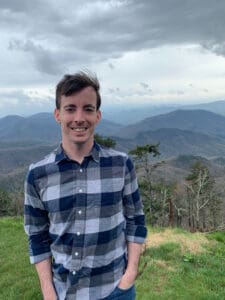
In my research I use quantitative, archival, spatial, and computational methods to study historical social change; exposure to stressors, risk, and resources; immigration; and population health. I am especially interested in how historical practices of racial control provoke changes in local institutions and cultures that unfold across historical time into the development of contemporary place-based disparities. In this work I collaborate across disciplines with sociologists, historians, geographers, epidemiologists, demographers, criminologists, environmental scientists, and more. To date, I have published my research in the American Journal of Epidemiology, Nature: Scientific Data, Socius, The Annals of the American Academy of Political and Social Science, and Social Currents. I use computational methods to collect and analyze historical data, to produce data resources for use by other scientific researchers, and have taught courses on computational text analysis, statistical analysis, and research methods. I am also serving as co-investigator on several grants related to structural racism and population health inequities in the United States.
Please describe one or two of your most interesting projects.
I am currently developing a project to simulate kinship networks estimating the scope of bereavement from fatal police violence. A related project uses agent-based models to simulate selection into social institutions and networks, exploring how social processes like selection and segregation impact inference and segment information spaces, posing challenges for learning and prediction from modeling.
How did you end up where you are today? (Your research journey)
I completed my PhD in sociology at UNC Chapel Hill followed by teaching at Washington University St. Louis, a postdoctoral fellowship at Duke with the sociology department and population research institute, and I am now a research scientist at the UM Institute for Social Research in the Landscapes of Population Health program.
What is the most significant scientific contribution you would like to make?
I hope to contribute to our understanding of how history impacts contemporary social outcomes. Specifically refining our ability to model and understand the pathways of change and persistence in social institutions and culture over time, shaping place-based heterogeneity in contemporary inequality.
What makes you excited about your data science and AI research?
I am excited to use insights from social science research and geography to build simulation models exploring the ways that social processes like selection, clustering and segregation impact our confidence in inference from computational models. To both estimate how social processes segment information spaces in ways that can inform our models, and to gain useful estimates of social processes.
What are 1-3 interesting facts about yourself?
I enjoy collaboration, both in playing music in my spare time, and in exploring new research ideas at work.