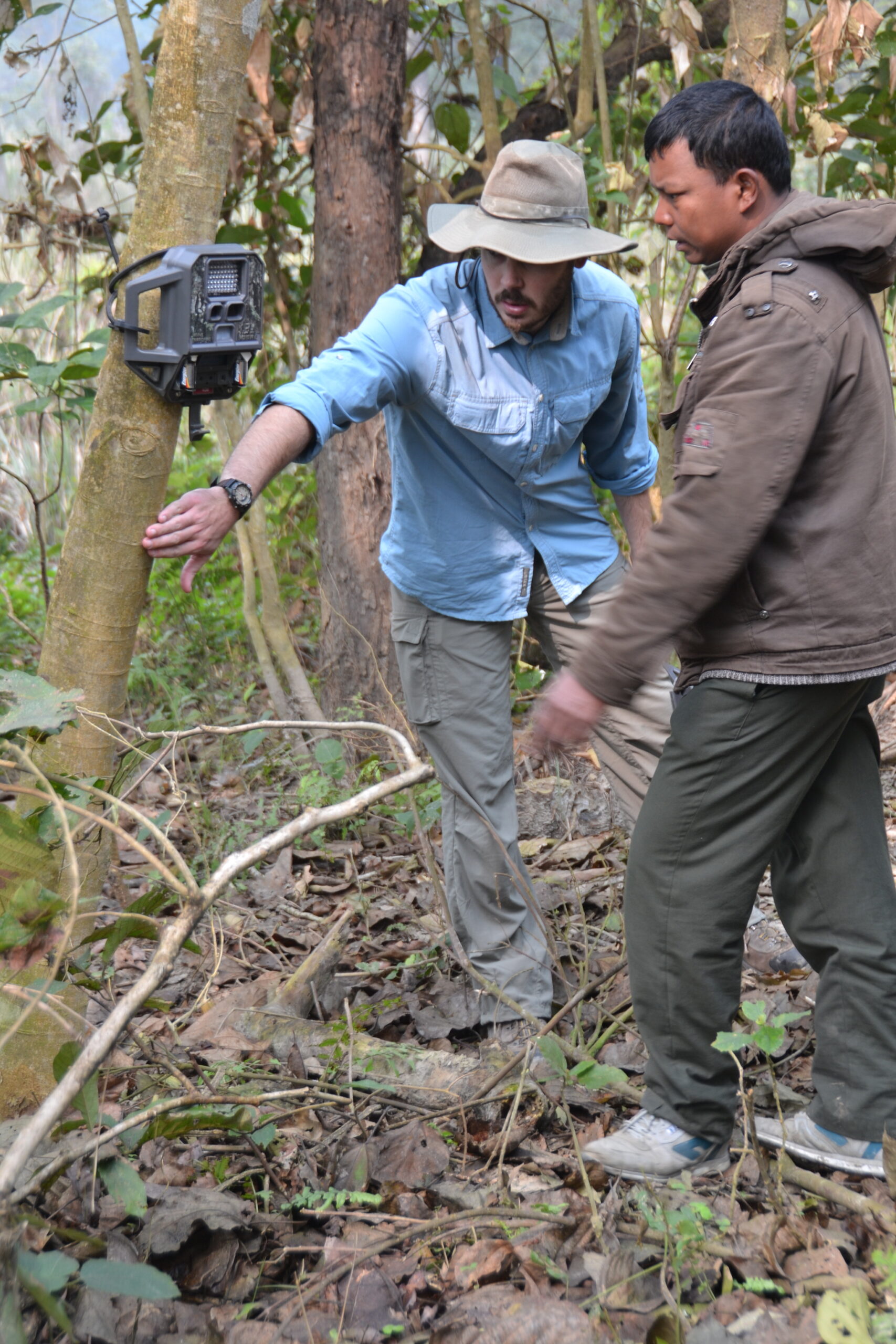
Carter’s research combines quantitative, theoretical, and field approaches to address challenging local to global wildlife conservation issues in the Anthropocene. His work includes projects on endangered species conservation in human-dominated areas of Nepal, post-war recovery of wildlife in Mozambique, human-wildlife coexistence in the American West, and the effects of artificial lights and human-made noise on wildlife habitat across the contiguous US. Research methods focus on:
- spatializing both human and wildlife processes
- probabilistic methods to infer human-wildlife interactions
- simulation models of coupled natural-human systems
- forecasting and decision-support tools